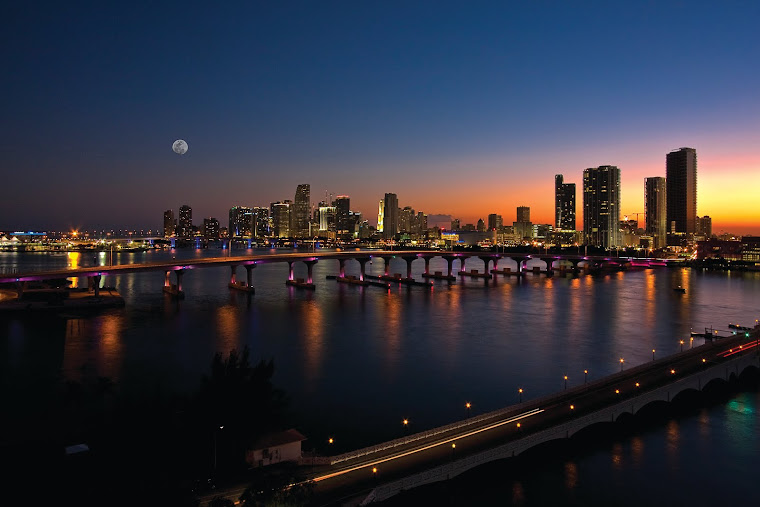
The Criscitos has been selling South Florida luxury and commercial real estate for over a decade and has sold over $1 billion dollars of property. They work as a multi-lingual team speaking english, Spanish, Italian and Portuguese. They carved out a niche as a leading boutique real estate company with two distinct divisions -residential and commercial- both personally overseeing by Marcela and Anthony Criscito.
Wednesday, April 22, 2015


Saturday, February 1, 2014
Miami developers launch three condo projects in one day
Marc Sarnoff played his part quickly Wednesday morning, shoveling some dirt on the ground of a Brickell Avenue construction site for a ceremonial groundbreaking. He didn’t linger after the photo op; there was another shovel awaiting him at another condo tower groundbreaking in just 25 minutes. And one more after lunch.
“We’ve never had a three-groundbreaking day in the history of Miami,’’ said Sarnoff, a Miami city commissioner. “I’ve done two, but never three.”
The back-to-back-to-back ceremonies within four hours and four miles of each other on Miami’s Brickell Avenue and in Edgewater offered fodder for both camps in Miami’s latest real estate divide.
On the one side, those who see a familiar pattern of over-confident developers rushing to create new condo towers in an over-heated market fueled by Latin American investors. On the other side, those who see more proof of a rebounding market so strong that it can launch three projects at once, thanks in part to a new finance model borne of the rubble from the last boom-and-bust cycle.
“It’s a much more serious buyer from Latin America. We never hear the word flip,’’ said Craig Studnicky, a founder of ISG, a brokerage that specialized in lining up Latin American investors during the housing boom of the last decade. “The conversations are not about, ‘Can I resell the unit, and how much can I sell it for when I resell it? It’s all about the rentability.’”
For sure, the real estate landscape hardly compares to the conditions buyers, sellers and financiers faced during the housing boom that ran from about 2003 to 2006 before a crash that hit bottom in 2011.
While banks then were eager to sell mortgages to buyers of modest means, financing is much harder to come by now. Then, a pre-sale condo contract required a 20 percent deposit; now the standard requirement is 50 percent.
The current crop of about 25,000 announced South Florida condo units east of I-95 are less than half of the roughly 50,000 built during the last boom, according to figures tracked by cranespotters.com and condovultures.com. This boom also lacks a wave of apartments being converted into condos like there was in the run up to the crash.
Still, the broad brushes of the last real estate boom are visible in this one, too. Developers are mostly chasing Latin American investors to sell condo contracts, and those investors don’t plan to live in their units. Prices once again are surging by double digits, and spiking almost as quickly as they did during the last boom. The frenzy has been strong enough to spark warnings about over-building and speculation, even as developers again point to the confidence that comes with strong pre-sales.
“There’s no question a gathering cloud is the number of projects that are planned,’’ said David Dabby, a real estate consultant in Coral Gables. “Whoever gets projects completed first in any cycle tends to win. It’s the ones completed somewhere between the second and fourth rounds that run into trouble.”
Jack McCabe, a Deerfield Beach consultant and one of the first to spot the pricing bubble before the crash, said he’s not nearly as concerned this time. “I don’t think we’re faced with the the same over-supply,’’ he said. But McCabe also cautioned against putting too much faith in the large deposits. “If prices get bolstered up high, and then prices drop... there’s a good chance they’ll walk away from those deposits just as the speculators did in the last decade.”
Wednesday’s streak of ceremonial shoveling (involving 25 shovels in all) began at 10 a.m. at the future of home The Bond, a 328-unit condo tower wedged between two existing buildings on the 1000 block of Brickell Avenue. Developer Alan Ojeda said about 70 percent of the units were already under contract, and that Latin Americans account for 80 percent of the sold units. Prices start at about $400,000 for the smallest units and run close to $2 million for the penthouse.
Those buyers agreed to pay 50 percent of the purchase price in advance, allowing Ojeda’s Rilea Group to start building without a construction loan. The advance payments have let developers circumvent a tight credit market by using their buyers’ cash to get a project going and then approaching banks for the final payments to contractors. “Other projects started looking for a construction loan when they were paving the 14th floor,’’ Ojeda said.
Ojeda’s staff delayed the start of the ceremony by about 30 minutes while waiting for dignitaries to arrive, which caused some watch-glancing from attendees planning to hit the next groundbreaking at 11.
“I’m going to try for three,’’ said Sonja Bogensperger, head of business development for Miami’s Downtown Development Authority. “I think it’s awesome.”
Around 11:30 a.m., Bogensperger was on a vacant waterfront lot on Edgewater’s NE 27th Street to watch Sarnoff and Miami Mayor Tomas Regalado congratulate developers Stephan Gietl and Fernando Levy Hara for launching their 90-unit condo project, The Crimson.
“This shows Miami has already come back,’’ Regalado said of the repeat ground breakings. “It’s not that Miami is coming back.”
Roughly three hours later, Regalado had circled back to downtown, about two blocks away from the day’s intial ceremony. This time, he was the guest of honor at a ground breaking by the Related Group, the Miami development firm at the center of the prior decade’s over-heated market.
Related Group CEO Jorge Pérez said Florida lends itself to boom and bust cycles, but he said the company learned lessons from the crash. He said the 453-unit SLS Brickell is almost completely sold out, with buyers agreeing to pay 50 percent of the purchase price before construction workers finish the top floor of the 52-story building.
“We are trying to reduce the chance,” he said, “that there will be a bust like the last time.” Source:
By DOUGLAS HANKS and HANNAH SAMPSON
dhanks@MiamiHerald.com
http://www.miamiherald.com/2014/01/22/3886672/miami-developers-launch-three.htmlSunday, January 19, 2014
One in 5 home sales $1 million & up
Million-dollar homes are selling faster than ever.
So fast, in fact, that 156 sell per month, on average, in Miami-Dade and one in every five sales of single-family houses is for a property costing at least $1 million.
As for million-dollar-plus condominiums, they account for one in every eight sales countywide.
At Esslinger-Wooten-Maxwell Realtors, a million-dollar home sold every 17 hours in the past year, with brokers moving more than 500 such properties between November 2012 and November 2013.
“And we don’t have December’s numbers yet,” said Valaree Byrne, an EWM broker and member of the Commercial Industrial Association of South Florida.
Countywide each month, brokers trade 71 single-family houses and 85 condos in the million-dollar range.
And these units are changing hands faster, spending about 30 days less on the market in the last quarter of 2013 than they did around the same time in 2012, according to data from Avatar Real Estate Services.
“This means there are so many people out there looking for luxury properties that there’s a huge uptick in the luxury market,” said Ms. Byrne.
And with demand outstripping inventory, brokers say it’s a sellers’ market.
“A million dollars doesn’t buy you very much any more, unfortunately,” said Rob Feland, a top producer with Avatar Real Estate Services.
So what can $1 million buy in Miami-Dade’s real estate market? Here’s a snapshot:
-“Old Miami”: “There’s a well-kept secret in this town about some condos that are so reasonably priced that a million dollars buys you a really deluxe unit,” Mr. Feland said.
Take Palm Bay Towers and Palm Bay Condominiums, at 720 and 770 NE 69th St., in the historic Bayside district, in Northeast Miami between Morningside and Belle Meade. The towers are the only ones in Miami-Dade built in Biscayne Bay.
Two of the plush $1.1 million listings offer about 3,000 square feet each with three bedrooms, 3.5 bathrooms and double exposures looking east toward Miami Beach and south toward downtown’s high-rises.
The development offers open floor plans, kitchens with high-end appliances, bathrooms with stem showers, new impact glass, Olympic-size pool, full marina, 74 apartments on multiple acres, plus easy access to downtown and the financial district.
“You just don’t find amenities like these. It’s a paradise,” Mr. Feland said. “There are an awful lot of buildings on the market that have very high-end finishes and very high-end prices, but the square footage is much smaller. When a building owner goes through the trouble of putting in the best of the best, then you get the best of both worlds – location and finishes.”
The landmark condo development boasts a list of current and former residents that reads like a who’s-who of Miami and international business circles, including Wolfsonian Museum founder Mitchell “Micky” Wolfson Jr. and industrialist Roy Carver.
“There’s a tremendous amount of old Miami history there,” Mr. Feland said. “A lot of Hollywood types used to come here and stay there. It was party central for yacht owners and the horse racing set.”
-Brickell Key: At the 40-floor Carbonell tower, a 1,500-square-foot condo commands an asking price of $920,000. For just under $1 million, buyers get a two-bedroom, two-bath unit with two parking spaces, storage, marble or wood floors, a state-of-the-art kitchen with Sub-Zero refrigerator and high-end appliances by Miele, a 114-year-old German manufacturer of luxury household and commercial products.
They also get an address on Brickell Key, an island east of Brickell in Biscayne Bay.
“That represents more or less what you can get for $1 million,” said Jose Roman Sosa, a former top producer at Swire Realty and now head of JR Sosa Properties. “With a million, a million two, you can buy two bedrooms in Asia [condos], but it’s a smaller space.”
At Asia, at 900 Brickell Key Drive, units start around $1.1 million and reach the $9 million mark. In the luxury condo market, starting prices around $1,000 per square foot buy 12-foot-high ceilings, space designed to show off art collections, infinity pools, gyms with racquet ball and multiple tennis courts, concierge service, valets and private elevators.
“That’s what you find in today’s buildings,” Mr. Sosa said. “It’s all about the services and amenities.”
It’s also all about height, with about $3,000 to $5,000 separating the price of similar units on higher floors. “If you’re on the 30th floor compared to the 10th floor, that’s a 20-floor difference, so we’re talking about $60,000,” Mr. Sosa said.
And in properties where elevation determines whether buyers get water views, several thousand dollars separate those with that perk from those without.
-Miami Shores: In the kind of neighborhood realtors describe as “park-like” and a “tranquil oasis,” slightly more than $1 million buys a four-bedroom, three-bath house with a pool and 20,000-square-foot triple lot.
“Everybody is always talking about Miami Beach, but Miami Shores is like Miami’s Mayberry – kind of idyllic,” said Nancy Batchelor, a broker at EWM Realty International.
For about $1.1 million, buyers can get a nearly 3,400-square-foot home in the neighborhood where children’s strollers and dog walkers line the ample sidewalks. With a private country club and private schools, the neighborhood attracts buyers looking for security and exclusivity.
Ms. Batchelor’s million-dollar listing is a walled and gated house designed for privacy and entertaining. It features landscaped gardens, mature trees, cypress ceilings, original mosaic clay tiles, a dark-bottom lagoon pool with cascading waterfalls, spacious eat-in kitchen and covered porch.
“In Miami Beach it’s hard to find listings for $1 million,” she said. “If you need four bedrooms it’s definitely hard. As the market went up, a lot of people who had their heart set on Miami Beach are now looking in different areas – Morningside, Miami Shores – because they can buy more for the money. They’re discovering some of the communities that you know about, if you’re a local.”
-High Pines: In the picturesque and tiny community between South Miami and Ponce Davis, $1 million can buy an older but charming home. Renovated houses in that community fetch more than $1 million, but a recent listing – a four-bedroom at 7655 SW 52nd Court built in the 1960s – sold for $875,000.
“It’s really a little gem,” said broker Toni Schrager, a founder of Avatar Real Estate Services. Large oaks in the front yard, abundant natural foliage and a pool invite outdoor living. But the house needed a new kitchen and bathrooms, as well as impact windows and doors.
“You could have moved in and lived there if you wanted to, but most people would have renovated it,” Ms. Schrager said. “The buyers fixed it up, and when they were done they were probably in for about $1.1 million.”
But regardless of listing details, brokers say the best million-dollar buys all have a few things in common, including finer finishings and the right zip codes.
“They say the most important things in real estate are location, location and location,” Ms. Schrager said. “No one’s been able to disprove that.”
Source:
Written by Samantha Joseph on December 31, 2013
http://www.miamitodaynews.com/2013/12/31/one-5-home-sales-1-million/
Sunday, January 5, 2014
There’s economic optimism for 2014 …but not a lot
South Florida home prices will keep going up, but not as dramatically as they have been.
Employers will continue adding jobs, but will still face familiar headwinds.
An airline merger will bring more international visitors and cargo through Miami. But those trade gains may be offset by the falling price of gold.
In nearly every sector, South Florida’s economic outlook for the new year is a mixed bag of cautious optimism.
Analysts point to a relatively strong finish to 2013 as a sign that positive momentum will continue into 2014. But temper expectations, they warn, that this year will restore the region to pre-2007 prosperity.
Real estate
The impressive rebound in South Florida’s housing market during 2013 silenced most skeptics.
The arrival of 2014 will reveal just how much staying power there is in the housing recovery.
Virtually everyone who tracks the region’s housing market doubts that home prices in Miami-Dade and Broward counties will jump as much as they did in the past year. Instead of double-digit, year-over-year price spikes, market watchers expect single-digit price increases in the new year.
“There are some headwinds in the housing sector we’re going to be dealing with in 2014,” said Sean Snaith, director of the University of Central Florida’s Institute for Economic Competitiveness. “Prices will rise again, but the pace will diminish.”
The reasons are many.
The big price gains for homes and condominiums in South Florida over the past two years have pushed many investors to the sidelines as bargains got scarce. That leaves the housing market more dependent on the actual end-users.
“It’s going to be a test of Florida’s ability to transition from Blackstone,” Snaith said, referring to the giant investment firm that has snapped up thousands of homes for rental, “to Mr. and Mrs. Black.”
Major national policy issues also are conspiring to slow the housing market — including in South Florida.
New banking regulations stemming from the Dodd-Frank law are likely to crimp the availability of mortgages. The Federal Reserve’s tapering of its bond-buying program will spur higher interest rates, making home purchases less affordable. And the implementation of the Affordable Care Act will trigger more uncertainty, Snaith said.
At the same time, South Florida home buyers will likely have a bigger selection of homes and condos to choose from, which could curtail the bidding wars that recently became common amid tight inventory.
Still, those looking for a bubble to burst in Florida’s housing market may have a long wait.
Experts say the lending situation is completely different than it was before the last bubble burst in South Florida. Many properties sold for cash, and even those with mortgages typically involved higher levels of equity from better qualified borrowers.
“The financing situation is what is preventing this from becoming a bubble,” Snaith said. “We don’t have that easy sugar high that was in place” during the last boom.
Employment
Miami could use a new hiring trend in the new year.
While 2013 continued the recovery that began in 2010, the pace lagged for much of the year. As of November, the most recent month with data available, Miami-Dade employers added 10,400 jobs in 2013, compared with 15,000 for Broward’s smaller economy to the north.
The fall labor reports did bring more encouraging numbers — job growth spiked in Miami-Dade to an annualized rate of 5 percent, the highest since April 2012, according to the federal Bureau of Labor Statistics. If those gains aren’t given back in the coming months, 2014 could be the year that finally moves the recovery into an expansion, closing South Florida’s 60,000-job gap from its pre-recession peak of 1.9 million payroll slots (hit in August 2007).
“I have a more positive outlook than a month or two ago — mainly because of signs of more rational economic policies coming out of Washington,” said Robert Cruz, Miami-Dade’s official economist. “If we get relatively good local payroll numbers for December, I think we’ll have enough confidence to expect a meaningful acceleration of job growth in 2014.”
Still, the housing crash looms large in South Florida’s recovery in the employment sector. While sales of existing homes have revved up and prices are on the way up, new-home construction still hasn’t bounced back enough to move the hiring needle in Miami-Dade.
The University of Central Florida predicts 2 percent job growth for South Florida in 2014. That’s a respectable figure, given that the university projects that South Florida will end up posting a 2013 job-growth rate of just 1.5 percent.
Moody’s handicaps Miami-Dade as an underperformer for its 2014 hiring list, with job growth forecast at 1.8 percent increase in payroll slots. That’s below the regional forecast of 2.2 percent and the national forecast of 2 percent, not to mention the 2.4 percent job growth that Moody’s predicts for Broward’s payrolls.
“Miami had a more substantial debt overhang, and household de-leveraging will prevent it from growing as fast as the nation,” said Chris Lafakis, a Moody’s economist who follows South Florida. Translation: Underwater mortgages are still holding back spending.
And government employment remains the biggest anchor to employment, with Miami-Dade’s public sector down about 5,000 positions from just a year ago.
Small businesses, too, added jobs in 2013, but not enough to restore 2007-level hiring, according to the nonpartisan National Federation of Independent Business. The federation’s most recent optimism index showed that small-business owners reported increased concern about the cost and availability of insurance for employees.
“There is also a hint that employers are getting an inkling of what Obamacare might mean for labor costs,” federation chief economist Bill Dunkelberg said of the survey. “This will be a major source of angst and uncertainty in 2014.”
Victoria Villalba, president of Doral-based staffing firm Victoria & Associates, said she isn’t expecting anything but modest growth in the new year. She saw her sales grow by about 4 percent in 2013 but had expected a stronger performance when the year began.
“We’re seeing recovery in all sectors,” she said. “But it’s just been slow.”
Tourism
Tourism jobs continued to climb in South Florida in 2013, as they have steadily since 2009.
The Greater Miami Convention & Visitors Bureau reported 110,500 jobs in hotels, restaurants and other positions that service the tourism industry, up 3.5 percent from 2012.
And tourism dollars kept rolling in. Hotel rates ticked up in 2013 and should keep doing so in the new year, according to Scott Berman, head of the U.S. Hospitality and Leisure group at PricewaterhouseCoopers in Miami.
The average daily hotel rate in Miami-Dade was $174.05 in October, the most recent month for which data is available, according to Smith Travel Research. That represents a 7.9 percent year-over-year increase. Occupancy rates also grew in the same period, reaching 77.8 percent.
“When you exceed 70 percent occupancy, basic economics tells us that you can increase pricing due to high demand,” Berman said. “The expectation is that occupancy rates will remain strong, and consumers can expect to pay more for hotel accommodations in greater Miami.”
While Miami Beach hotels fetch the highest room rates in the area, Berman said he is keeping an eye on new hotel openings downtown, in Brickell and near Miami International Airport. He credited the airport for making Miami more accessible to international travelers.
“By opening new flight routes, particularly in Latin America, that is very helpful to the lodging industry,” Berman said.
He noted that the American Airlines-US Airways merger could add routes between Miami and Asia that would bring business travelers and tourists with deep pockets.
“That’s really a robust region, and if we want to talk about segments that spend money, the Chinese are near the top,” Berman said.
“All of this considered, our view is that the market will continue to grow.”
Trade
The newly approved AA-US Airways deal, which will create the world’s largest airline, also should expand Miami’s appeal as a cargo hub. The merger is expected to increase shipments between Miami and Amsterdam, Athens, Tel Aviv, Venice and other cities.
But Ken Roberts, whose Coral Gables-based WorldCity compiles and analyzes trade data, warned that potential trade boosts from the airline merger could be offset by falling gold values and other factors.
“The days of easy trade gains appear to be, at least for the short- to medium-term, over,” he said. “Not only have we got enough ‘stuff,’ but now we are buying tablets and smartphones instead of computers. They are less expensive and they are lighter, which have an impact on import-export trade numbers.”
Roberts said South Florida’s economy will need time to recover from the burst of the “gold bubble.” The region benefited when investors “flocked to gold as a security blanket” during the economic downturn, he said.
“Gold’s value skyrocketed, and everyone, from companies selling mining equipment …to mine owners in Mexico and Colombia … to logistics companies shipping gold as quickly as they could, profited,” Roberts said.
Much of that cargo went through Miami International Airport, which became the nation’s leading import destination for gold; the precious metal was South Florida’s top import and export in 2012, Roberts said.
“That will not be the case in 2013,” he continued. “South Florida’s trade is paying the price for [the gold bubble] now, and will continue to pay for it in 2014.”
Consumers
The housing crash and hiring crisis used to be the main culprits behind Florida’s deep dives in consumer confidence. But in recent years, Washington has largely been to blame.
October’s government shutdown sent confidence plunging in the Sunshine State, with the University of Florida’s confidence index dropping faster than at any time since April 2011 (when the United States was approaching that year’s debt-ceiling crisis).
But Chris McCarty, the economist behind the university’s confidence survey, sees a less worrisome year ahead when it comes to the nation’s capital.
“There’s less drama in Washington,”' McCarty said. “It looks like Washington will be less of a confidence driver here in Florida.”
The bipartisan budget agreement reached in December seems to have removed from the political table another government shutdown. And while the latest debt-ceiling limit is again on the fiscal horizon, Washington watchers sound less resigned to the inevitability of another brinkmanship moment that rattles markets and consumers alike.
Still, McCarty sees housing losing its ability to inspire in 2014. Residential prices soared in 2013 — up 15 percent in 12 months in the Case-Shiller’s October report for South Florida that was released on Tuesday. Most analysts predict at best a leveling out of those prices next year, with a normal market unable to sustain that kind of velocity.
If the momentum slows, the pace is bound to serve as a reality check for homeowners who may have been caught up in 2013’s real-estate frenzy.
“Those who are expecting their home values to get back up to where they were in 2006 or 2007 before they sell,” McCarty said, “they’re going to be waiting a while.” Source:
By Douglas Hanks, Martha Brannigan and Evan S. Benn
ebenn@MiamiHerald.com
Wednesday, November 20, 2013
Largest home for sale in Broward will be auctioned Dec. 8
If you need a house that stretches across east and west wings, a massive McMansion — said to be the largest home for sale in Broward — will be auctioned off on Dec. 8.
The 23,576-square-foot, custom-built home on 10 acres features seven bedrooms, eight full baths and two half baths. It boasts inlaid Italian marble and cathedral-style ceilings, and comes with a guest house, four-car garage, and statues and objects of art from all over the world.
“The finish work on the inside is the most amazing, with 30-foot high ceilings, chandeliers. It’s just magnificent,” said Jim Gall, president of Auction Company of America, hired to auction off the home, which was listed a year ago for $10 million.
“You can literally get lost in it,” said Gall, who says it is largest home he has ever auctioned.
A two-day auction at the home, at 13811 Luray Road in Southwest Ranches, begins at 11 a.m. on Dec. 7 and includes art, jewelry and other items. It will continue at 1 p.m. on Dec. 8, culminating with the sale of the home at 3 p.m. Previews will be conducted on several days, beginning on Nov. 17.
Gall said he plans to start the bidding on the house at $5 million.
Homeowner Ray Moses said he and his wife, Pam, spent five years building the mansion after buying the property, which was formerly used as a horse boarding facility. Broward County property records show they paid $2,225,000 for the acreage in 2003.
Moses said the home was his wife’s dream.
“She wanted to do this, and who am I to say no?” said Moses, 69, who is in the childcare business and owns five daycare centers in Broward.
Moses said his wife decorated the home, and sat with Delray Beach architect Rick Brautigan to design it. The couple spent $1 million on Italian-made drapery and window treatments, and more than another $1 million on crystal chandeliers. Now, the couple, whose children are grown, plan to downsize. They’ll probably buy a home nearby, Moses said.
“I like the country, and I like to have a lot of tropical fruit trees,” he said. “I still want somewhere where I can swear without the neighbors hearing me.”
Source: http://www.miamiherald.com/2013/11/06/3736235/largest-home-for-sale-in-broward.html
By Ina Paiva Cordle
icordle@MiamiHerald.com
Thursday, November 14, 2013
Miami cracks Top 10 luxury residential markets
Miami’s in with the in-crowd, tastemakers say, debuting on Christie’s International Real Estate’s list of top 10 luxury residential markets.
The real estate arm of the iconic auction house publishes a global research report of trends across the world’s prime real estate markets, tracking spending patterns among wealthy buyers.
And this year for the first time it named Miami as one of the cities where the rich not only play but also stay.
“Miami is on everybody’s radar across the world,” said Ron Shuffield, president and CEO of Esslinger-Wooten-Maxwell Realtors, an affiliate of Christie’s International Real Estate. “We have a lot of people coming here to spend their money and enjoy what we have.”
In naming the choicest markets, Christie’s selection criteria included cities’ gross domestic product; number of billionaire residents; their tally of Fortune 500 company headquarters; performance on S&P/Case-Shiller Home Price indices; position on the AT Kearny Global Cities Index; ranking on Swiss bank UBS’ list of most expensive cities; Globalization and World Cities Research Network rankings; and the presence of a Christie’s affiliate.
Emerging as the most attractive cities for the rich: Dallas, Hong Kong, London, Los Angeles, Miami, New York, Paris, San Francisco and Toronto. Côte d’Azur, also called the French Riviera, even though not a city, also made the list, “added to this elite survey group for being one of Europe’s most highly prized second-home destinations for more than a century.”
“As the only real estate network owned by a fine-art auction house, Christie’s International Real Estate has unparalleled access to the [high-net-worth individuals] around the globe who procure assets such as art, wine, jewelry and, of course, luxury real estate,” said Bonnie Stone Sellers, Christie’s International Real Estate CEO. “Together with the collective knowledge of its 125 affiliated real estate brokerages in 41 countries… Christie’s International Real Estate is uniquely qualified to understand the characteristics and trends associated with the prestige real estate market.”
And observers say Miami has cultivated the cachet to draw these buyers.
Helping its appealing: An emerging cultural offering that now includes the internationally renowned Miami City Ballet, the Miami Symphony Orchestra, major art museums and world-class food, art and cultural festivals.
Add to that plans to draw boaters, coupled with the area’s luxury retail outlets, daily flights to major world centers and a growing financial services sector, and it’s clear Miami allows wealthy homebuyers access to choice recreation and international business centers, Mr. Shuffield said.
“And as trite as it sounds,” he said, “the weather is still a big draw.”
Source: http://www.miamitodaynews.com/2013/11/13/miami-cracks-top-10-luxury-residential-markets/
Written by Samantha Joseph on November 13, 2013
Wednesday, November 13, 2013
Genting tears down ex-Herald facade, adjacent garage
The Malaysia-based Genting Group has torn down the entrance to the former Miami Herald building and a two-story parking garage next door as they prep to build their mixed-use mega-development set for the site.
Genting plans a five-star hotel, luxury condos, restaurants, retail and an 800-foot promenade along 14 bayfront acres. The initial proposal called for an $3.8 billion casino, but that has been significantly scaled back. State legislators have yet to grant Genting a gambling license for Downtown Miami, according to the South Florida Business Journal.
Last month, Genting moved into the Omni Offices building at 1501 Biscayne Boulevard next door to the construction site, as previously reported.
Genting paid $236 million for the former Herald site. The newspaper moved from its former downtown location to Doral in May. [South Florida Business Journal] — Mark Maurer
Tuesday, October 29, 2013
Venezuela leads Latin real estate splurge
The latest industry report reiterates what top residential realty brokers have been saying: Latin American buyers are essential to the local market.
Florida Realtors’ “2013 Profile of International Home Buyers in Florida” states 69% of international buyers in Miami are from Latin America or the Caribbean.
“They are major players,” said Lynda Fernandez, senior vice president of public relations for the Miami Association of Realtors.
Of the top six international markets for Miami-Dade residential realty, five are Latin American, she said.
Venezuela, which accounts for 22% of international buyers, leads the list. Argentina follows with 11%, then Brazil with 10% and Peru 9%. Canada and Colombia tie for fifth place with 6%.
The Miami-Miami Beach metropolitan area is the top destination in Florida for international realty buyers, according to the statewide report compiled during July and August and covering the previous 12 months.
Venezuelan buyers were especially drawn to the area. Their purchases, realtors said, were almost evenly split between single-family detached houses and condominiums or apartments, while about 6% bought commercial property.
Many chose property in central city or urban areas, as well as resort areas, according to the report, and the majority bought for rental or investment purposes, with fewer than 10% wanting vacation homes.
They paid median rates between $300,000 and $399,000, according to the report. About 33% of buyers bought homes worth more than $500,000. The mean price was $493,500.
Their investment was a significant driver in the local economy, market watchers say.
“Latin Americans real estate buyers were crucial in the market recovery and now continue to strengthen the vibrant Miami real estate market,” Ms. Fernandez said.
Sources:
http://www.miamitodaynews.com/2013/10/09/venezuela-leads-latin-real-estate-splurge/
Written by Samantha Joseph on October 9, 2013
Wednesday, October 23, 2013
South Florida home prices and sales rose in September
Juiced by foreign buyers and investors, South Florida’s housing market registered strong gains in September.
The latest price and sales increases — mirroring a string of similar results in prior months — underscore a solid housing recovery for a region hard-hit by the real estate crash.
The median price of a single-family home in Miami-Dade County jumped 18.4 percent in September to $225,000 from $190,000 a year earlier, while the median condo price rose 21.3 percent year over year to $181,875 from $150,000, according to the Miami Association of Realtors.
In Broward, the median price for a single-family home jumped 31.7 percent in September to $270,000 from $205,000 a year earlier, and was up 18 percent to $104,999 from $89,000 for condos and townhouses year over year, according to the Greater Fort Lauderdale Realtors.
Sales of Miami-Dade single-family homes rose by 21.8 percent with 1,108 closings in September, up from 910 a year earlier, while Miami-Dade condo sales increased 4.6 percent to 1,352 closings from 1,292 a year earlier.
Miami-Dade — ground zero during the real estate bust — has now chalked up 27 consecutive months of year-over-year price increases for condominiums and 22 months of year-over-year price increases for single-family homes.
The housing market kept humming in Broward County, as well.
Sales of Broward single-family homes rose 13.4 percent in September to 1,211 from 1,068 a year earlier, and condo sales rose 6.6 percent to 1,252 units from 1,174 a year earlier.
“Everything is still trending up,” said Stephen B. McWilliam, president and broker at Florida StateRealty Group in Fort Lauderdale and immediate past president of the Greater Fort Lauderdale Realtors.
Cash continues to be king: 71 percent of Miami-Dade condo closings in September were cash deals.
“It’s putting a lot of strain on buyers with 5 percent or 10 percent down. They can’t have choices,” said Michael Davalos, an agent with Coldwell Banker in Miami Beach who just helped a buyer nail a deal on a foreclosed house after a protracted search.
Eric Schneider, a first-time homebuyer who was looking to put down 20 percent, said he made several offers in the past eight months that didn’t pan out before he finally clinched a foreclosed property in the Richmond Heights neighborhood. “Certainly, at times, there’s been a lot of competition,” said Schneider, who works in healthcare.
Inventory remained relatively tight in both counties during September, although the supply of Miami-Dade condos listed for sale jumped 20.5 percent to 8,970 units from 7,442 units a year earlier. That amounted to a 6.3-month supply, up from a 5.6-month supply in September 2012. Meanwhile, condos newly listed in Miami-Dade in September totaled 2,727, up from 2,212 a year earlier.
“It’s moving toward a more balanced market for condominiums,” said Lynda Fernandez, a spokeswoman for the Miami Realtors.
The inventory of Miami-Dade single-family homes rose 4.8 percent in September from a year earlier. With homes selling at a rapid clip, that amounted to just a 4.9-month supply in September, or 4.9 times the number of homes sold, down from a 5.6-month of supply a year earlier.
A supply of less than six months is typically regarded as a sellers’ market, in which sellers can call the shots and prices rise at a brisk pace.
Single-family homes in Miami-Dade took a median of 41 days to sell, compared with 42 days a year earlier.
In Broward, amid tight inventory and robust demand, the median period to sell a home was 27 days, down from 42 days in September 2012.
The number of homes listed for sale on the Multiple Listing Service in Broward in September was 4,737, up 0.9 percent from 4,693 a year earlier. That is just a 3.8-month supply, or 3.8 times as many homes on the market as were sold in a month, down from a 4.2-month supply a year earlier.
The inventory of condos for sale rose 9 percent to 6,430 from 5,901. But with units selling quickly, the supply inched up to 4.6 months in September from 4.4 months a year earlier. That is still a very tight supply.
Condos in Broward sold at a median pace of 36 days in September, down from 38 days a year earlier.
“We certainly have a shortage of inventory, which is leading to price increases,” said Philip Vias, a broker associate with Berkshire Hathaway HomeServices Florida Realty in Fort Lauderdale. Homebuyers are motivated, he said, as “they have seen the prices go up and the interest rates are so low.” It’s a great time to buy.”
While the year-over-year gains remain strong, both Miami-Dade and Broward sales softened from the peak summer month of August.
The median prices for both single-family homes and condos in Miami-Dade were down 4.3 percent in September from August. The volume of condo sales dropped 15 percent month-to-month, while single-family home sales were down 8.4 percent from August to September. “We think that year-over-year comparisons are more meaningful. There are fluctuations month-to-month,” Miami Realtors’ Fernandez said.
Compared with August, the median price of a Broward single-family home in September was essentially flat, while the median price of a condo fell 11 percent. Sales of condos were down 17 percent from 1,513 closings in August, and single-family home sales dropped 13 percent month to month, from 1,396 closings in August. Source: http://www.miamiherald.com/2013/10/21/v-fullstory/3702589/broward-existing-home-prices-and.html
By Martha Brannigan
mbrannigan@MiamiHerald.com
Tuesday, October 15, 2013
Will Rising Rents Send Industrial Users North of Miami?
As a new social season begins on Miami Beach, renowned chefs, restaurateurs, real estate developers and hoteliers continue to invest in the city; bringing their businesses and brands here as Miami Beach ups its game, attracting an increased number of global (and U.S.) residents who are putting down stakes - and visitors who are curious about this city by the sea that is buzzed about everywhere. Brand Miami Beach has truly become an IT destination. And the numbers tell the story: Over a dozen celebrity chefs call Miami Beach home; 50 new restaurants and 13 new hotels have opened or are slated to open this year and luxury condo buildings are going up every few months. Miami Beach is a lightning rod - a beacon - and just when you thought it couldn't get any sexier or hotter, the culinary, real estate and arts scenes - among others - continues to explode. As the 2013-14 season opens, "New" is the code word all over the city.
"Year on year Miami Beach is becoming a global city, a force to be reckoned with in the real estate, hotel, restaurant and entertainment businesses," says Jeff Lehman, Chair, Miami Beach Visitor and Convention Authority (MBVCA). "No longer just a beach town, Miami Beach has evolved into a complex, urbane, chic city that is attracting the best-of-the-best around the world. Becoming more erudite and refined, this city is maturing before the world's eyes."
Miami Beach never disappoints. It is a city full of surprises, an evolving scene, a plethora of hotel, restaurant and event offerings and of course, Art Basel.... Season 2013-14 will be no different as globally recognized hotel brands - Marriott, Hyatt; celebrities, new restaurants by award-winning chefs - Michael Mina 74, Lure Fishbar; European imports - Laduree - and ultra luxe condo towers open their doors and/or put down roots on Miami Beach. The city's popularity and appeal has businesses and celebs flocking from Las Vegas, Chicago, New York and Paris.
Below is an overview of What's Hot, What's New on Miami Beach, Season 2013-14:
MIAMI—PortMiami is preparing for the giant cargo ships that will start traversing a deeper, wider Panama Canal in 2015. How will the increased number of containers affect the industrial market in South Florida? And how competitive will Miami be with other ports in Florida and the United States?
GlobeSt.com caught up with, Edward W. Easton, chairman of The Easton Group in Miami, to get some answers. With four decades of experience in commercial real estate and a solid focus on the industrial market, he has some clear thoughts on where we're headed.
GlobeSt.com: Just how massive are the preparations for the expansion of the Panama Canal?
Easton: The upgrades are major, about $2 billion in total. The PortMiami paid $43 million for four super-sized cranes that can handle cargo ships that each carry up to 18,000 containers versus 8,000 today.
Local government is spending $550 million on a tunnel that will enable tractor-trailers to go from the port directly to Interstate 95. Government entities are spending $122 million to deepen the PortMiami channel to 50 feet; that will make the port only one of three on the East Coast at that depth and the only one south of Norfolk, VA. The Florida East Coast Railway connector to the port is coming back on line.
GlobeSt.com: What’s the likely impact on South Florida of these massive improvements?
Easton: We should see at least a 3% improvement in the local industrial economy. There will be more industrial park tenants as more goods pass through the port and are distributed in in the northeast corridor of the United States or shipped to Latin America.
The Asia Pacific region accounts for 35% of port trade now and that should double once the canal and port are enlarged. As a result, existing companies will expand and new companies will open here to hold that cargo until it’s distributed.
GlobeSt.com: How will the increased activity affect the industrial market?
Easton: Initially, rents will go up from the current average of about $7 per square foot. Once we get to a full position from the current 94% occupancy rate, developers will start construction. However, the rents on these new buildings will be higher because of higher land and operating costs. I predict we will see rents of $9 per square foot within three years.
GlobeSt.com: Will higher rents send companies looking for cheaper space?
Easton: No. Tenants won’t move out of Miami-Dade County because any savings from lower rents would be more than offset by higher trucking costs. Plus, Port Everglades and Port of Palm Beach don’t have the infrastructure.
Just as important, the international market operates here, not in Broward and Palm Beach. Companies in Latin and South America are comfortable doing business in Miami for language and cultural reasons.
Source: http://www.globest.com/news/12_713/miami/industrial/Will-Rising-Rents-Send-Industrial-Users-North-of-Miami-338636.html
By Jennifer LeClaire | Miami
Sunday, April 14, 2013
Zaha Hadid's One Thousand Museum: A Futuristic Skyscraper In Downtown Miami
here are the massive, feature-laden, but ever-so-surprisingly-normal looking unit floor plans for starchitect Zaha Hadid's downtown Miami condo tower One Thousand Museum, thanks to an anonymous Curbed tipster. The building consists of half floor and full floor units, and, towards the bottom, two-level half floor townhouses.
The full floor units, about 11,000 square feet each, on levels 51-58, come in two flavors, one with most of the living space pushed towards the front of the unit, depriving the master bedroom of a water view, and the other with the living space shifted slightly more to the side for the sake of the master bedroom's water view. The half floor units are about 5,400 square feet, and the townhouses are 8,600 square feet. Balconies are spacious, luxe amenities like media rooms, midnight kitchens, store-sized closets, lofts, libraries, and big service rooms come standard. The lower floors include two-level townhouses with double height living and family areas and private elevators.
Source: http://miami.curbed.com/archives/2013/03/20/one-thousand-museum-floor-plans.php
Source: http://miami.curbed.com/archives/2013/03/20/one-thousand-museum-floor-plans.php
Super tall condo coming to Brickell
A New York developer who made headlines in Manhattan with plans to erect a super skyscraper is now planning to launch a very tall condominium on Brickell Avenue.
Kevin Maloney, founder and CEO of Property Markets Group, said the developer will start taking reservations next week for Echo Brickell, a luxury condominium at 1451 Brickell that will rise about 750 feet — or 60 stories — and include up to 250 units.
Maloney and Ryan Shear, managing partner of PMG in South Florida, held a focus group Thursday at International Sales Group, which will market the pre-construction project. They gathered some of Miami’s top real-estate brokers to sound out what the market wants in what would become the tallest residential building in Miami to date.
“The caché of this building is certainly the height and the view,” said Maloney, who separately expects to break ground in July on Echo Aventura, a 190-unit bayfront condo that launched sales last fall.
Uruguayan architect Carlos Ott is handling the conceptual design of the Echo Brickell building, which will feature larger units than typically seen on Brickell. Penthouses will likely span more than 7,000 square feet.
With Miami’s latest condominium boom gaining steam, Maloney said competition was keen for the 1451 Brickell site, which sits on the east side of the avenue and currently houses the sales center for the Brickell House project. Newgard Development Group is building the 46-story Brickell House at 1330 Brickell Bay Drive a few blocks away.
PMG recently signed a contract to purchase the Echo Brickell land from an investor who holds it through a corporation, 1451 Brickell Inc.
“We like the site. There is a ton of stuff coming out in Brickell,” said Shear. “We will be able to tell buyers you have an unobstructed bay view.”
Shear said the site is zoned for 48 stories, but the developer can buy rights to build much taller under the Miami 21 zoning code. Maloney said the building will be thinner as a result and lose some of its efficiency, but the height — and views — will lend it more pizazz.
The tallest building in Miami is the Four Seasons Hotel at 1441 Brickell Avenue next to the Echo Brickell site. The Four Seasons, which was completed a decade ago, rises 64 floors and 789 feet, according to Emporis, a firm that provides data on buildings.
Southeast Financial Center ranks No. 2, and No. 3 is 900 Biscayne, currently the tallest residential building.
To be sure, records are made to be broken. Among other things, Tibor Hollo’s One Bayfront Plaza, approved years ago for 100 South Biscayne Boulevard, is planned for 1,010 feet, but the timing of that mixed-use project remains uncertain. The building now on the site is full of tenants.
PMG envisions Echo Brickell will have high ceilings — 10, 12 and 14 feet — with the more expensive, upper floor units getting the most spacious heights.
If all goes well, PMG expects to break ground in the first quarter of 2014.
Craig Studnicky, principal of ISG, which is in charge of pre-construction sales, expects the project will appeal particularly to affluent Latin American families.
Maloney, a tall and lean fellow who competes in triathlons and commutes between New York and Miami piloting his own plane, seems to have an affinity for tall and lean projects.
PMG is a partner with JDS Development in a project to build a tall, thin tower at 107 West 57th Street. along one of midtown Manhattan’s major east-west streets. The joint venture last year bought the Steinway piano building next door at 109 West 57th, and plans to use the air rights of that historic structure to go higher at the 107 location. Just how high is subject to negotiation.
“We are committed to keeping the Steinway building and the landlord committments,” said Maloney, whose firm has done scores of projects since it was founded in 1991. The developers, he added, want to keep the Steinway name on the building. The landmark structure includes an ornate rotunda that has served as an elegant showroom for Steinway pianos for decades.
At the Brickell site, PMG plans to feature a swimming pool that covers an entire floor about halfway up the building, with a gym and spa above it. The developers plan to offer various options for units, which will be move-in ready.
The Echo Brickell project comes as Miami’s downtown and Brickell area alone has some 23 other towers in various stages of planning and development, according to Peter Zalewski, principal of Condo Vultures. Eight buildings are under construction in the downtown and Brickell area.
But developers and Realtors insist that the market isn’t heading for another bubble because both the financing and the buyers are more solid than in the last go-round.
Maloney said there is little opportunity for flipping pre-construction contracts, a speculative practice that added froth to the last market. And buyers putting up hefty deposits aren’t apt to renege on deals like the investors who put down 20 percent did when the bottom fell out of the market last time.
PMG plans to employ the buyer-financed model that has recently defined the Miami condo market: Buyers will be required to deposit 20 percent of the purchase price at contract signing. Another 10 percent is due at groundbreaking; 10 percent more, when pool level is reached, and 10 percent when the building is topped off. The 50 percent balance is due at closing.
Shear said an appealing touch for buyers is the developer will pay interest on the deposits. Source: http://www.miamiherald.com/2013/04/02/3320065/miami-dade-property-appraiser.html
By Martha Brannigan
mbrannigan@MiamiHerald.com
Sunday, March 24, 2013
Hadid condo could reshape downtown Miami skyline
The world’s only female superstar architect, Zaha Hadid, unveiled an undulating, spider-like design for a new luxury condo tower on Biscayne Boulevard — her first residential project in the United States — that boldly looks to raise the design ante for Miami’s skyline.
The developers of the proposed 1000 Museum, Gregg Covin and Louis Birdman, also hope to capitalize on the location and the big design name to break through the price ceiling for a downtown Miami condo. They are angling for a stratospheric minimum of $4 million for the cheapest units, and a Miami Beach-like $30 million and up for penthouses. That means pricing would start at about $900 per square foot, an amount that’s already roughly double the price of the typical new downtown condo.
The 61-story tower would squeeze in among the so-called Four Horsemen high-rise condos across from Biscayne Bay and the emergent Museum Park, taking over a prime spot now occupied by a gas station, which Covin and Birdman have a contract to buy. The pawn shop property behind it on Northeast Second Avenue is not, for now, part of the $300 million project.
The futuristic design by Hadid’s London-based firm features an interlacing concrete exoskeleton, a bulging midsection and a set of rib-like lower balconies that has prompted comparisons by some local bloggers to a spider, a bug and an alien spaceship.
“We love Miami, and we feel we can create a beautiful addition to the skyline that will define the skyline in a new way,’’ Zaha Hadid Architects director Patrik Schumacher said. “I think it will have a new kind of appeal.’’
The Iraqi-born, London-schooled Hadid, whose firm has also designed a swooping new Miami Beach city parking garage, is known for flowing, curvaceous buildings that sometimes appear to melt. In the past decade, she has gone from experimental-minded iconoclast to sought-after designer, achieving the kind of popular recognition usually reserved for celebrity male architects like Frank Gehry. Her well-publicized struggles to be taken seriously in the notoriously male-dominated profession also made her a kind of feminist icon.
She has a residence on South Beach and was known to have long been seeking a signature local project. Previously, her only Miami work was a sculptural installation in the atrium of a Design District building.
Hadid is the third winner of the Pritzker Prize, often called architecture’s Nobel, currently working on a Miami condo project. Sir Norman Foster of Britain is designing a tower next to the Saxony Hotel in Miami Beach, while the Swiss firm of Herzog & de Meuron, also responsible for the new downtown art museum and the instantly famed 1111 Lincoln Road parking garage on South Beach, is designing a tower in Sunny Isles Beach.
The firm of a fourth Pritzker laureate, Rem Koolhaas’s Office of Metropolitan Architecture, for whom Hadid previously worked, has designed three companion buildings for the Saxony project, including the renovation of a smaller hotel, and is on a team vying for the redevelopment of the Miami Beach Convention Center.
The fact that Hadid and other eminent architects are designing exceptional buildings in Miami reflects a growing maturity and sophistication about design from developers and civic institutions, said Wolfsonian/FIU museum director Cathy Leff.
It also means the city can finally lay aside its longstanding inferiority complex, she hinted.
“It’s a sign of confidence in our present,’’ Leff, a Hadid friend, said. “We were always the city of the future. We no longer have to define ourselves that way. We are a city of now and it should be defined by the best designers.’’
Hadid’s hiring for the 1000 Museum tower had been previously announced, but Friday provided the first public look at her firm’s design. Such is the interest among followers of design that leaked images and commentary had already been posted on local blogs.
Schumacher said putting the structural support on the tower’s exterior and varying its width not only creates a striking appearance, but also has the practical benefit of allowing roomier units in the tower, which is relatively slender because of the lot’s small footprint.
“It’s good to have the structure on the outside,’’ Schumacher said. “It’s a fusion of technical issues and technical expression, of aesthetic expression. It gives an identity ot the project, which changes character as you move from the bottom to the middle to the top. It adds variety, rather than have endless, monotonous repetition of the same from the bottom to the top.’’
That last is, of course, a reference to the typical stacked-balconies-on-a-podium design of Miami condo towers, including 1000 Museum’s four companions, all by noted Miami architects. Ten Museum, next door to the planned new tower, was also developed by Covin.
But the developers and their architects deliberately set out to shatter that mold, Schumacher said.
Although the tower does sit on a multi-level garage, retail and amenities podium, the exoskeleton’s legs reach all the way to the bottom, tying the building to the street, Schumacher said. Designed under the city’s new Miami 21 code, the tower also will avoid some of the much-cricitized pitfalls of its four companions, built under a previous code, he said. Critics have compared their rear facades on Northwest Second, dedicated entirely to service facilities, to the back of a refrigerator.
1000 Museum, by contrast, “will have a nice presence all around,’’ Schumacher promised. “It doesn’t have a back side.’’
He said the building would be “pushed forward’’ on the lot to urbanely meet Biscayne Boulevard and the planned new park across the street, where new art and science museums are under construction.
The 700-foot tower would be the tallest of the ensemble facing the park. Like most recently announced high-rise residential projects, the 1000 Museum developers are aiming the project at the very top of the luxury market, which means principally foreign buyers with ready cash. The units would be large, between 4,500 square feet and 9,000 square feet.
Source: http://www.miamiherald.com/2013/03/18/v-fullstory/3292714/hadid-condo-could-reshape-downtown.html BY ANDRES VIGLUCCI aviglucci@MiamiHerald.com
Saturday, February 2, 2013
Foreclosure rate falls in metropolitan Miami
The foreclosure rate – the percentage of mortgages in some stage of foreclosure – fell to 14.59 percent in Greater Miami in November 2012, down 3.13 percentage points from a year earlier, continuing a long downward trend, CoreLogic said.
The percentage of delinquent mortgage loans in the Miami-Miami Beach-Kendall area fell 3.87 percentage points in November to 21.24 percent from 25.11 percent a year earlier, the Irvine, Calif.-based data firm reported.
The delinquency rate is the percentage of loans more than 90-days delinquent, including foreclosures and mortgages in which a lender has taken title to a property.
While metro Miami’s trends show continued solid improvement, its rates of foreclosure and mortgage delinquency remain far above national and state levels.
In November, the foreclosure rate was 10.41 percent across Florida and 2.97 percent nationwide. The delinquency rate was 15.45 percent in Florida and 6.45 percent nationally, CoreLogic reported.
Source:
By Martha Brannigan
mbrannigan@MiamiHerald.com
http://www.miamiherald.com/2013/01/29/3206736/foreclosure-rate-fell-in-metropolitan.html
Sunday, January 27, 2013
South Florida housing recovery on track
South Florida’s housing recovery remained on track last month.
Sales of existing single-family homes in Miami-Dade County jumped 16.4 percent in December 2012 from a year earlier, making 2012 a record year for sales, the Miami Association of Realtors said.
In Miami-Dade, the median price for a single-family home jumped 18.9 percent to $214,060 while that of an existing condominium soared 25.4 percent to $163,000 in December 2012 from a year earlier, marking 13 consecutive months of year-over-year gains. Miami-Dade condo sales climbed 9.8 percent to 1,395 units in December.
Broward County’s housing market is showing similarly strong demand and rising prices.
In Broward, the median price of an existing single-family home surged 21.1 percent to $230,000 in December from a year earlier, according to the Greater Fort Lauderdale Realtors. The median price of an existing condo or townhouse in Broward jumped 24.7 percent to $95,100 year over year, the group said.
Sales of single-family homes in Broward climbed 14.9 percent in December from a year earlier while the volume of condo and townhouse closings increased 4.7 percent over the period.
Sellers have gained the upper hand amid a tight inventory of properties for sale and often can choose between competing offers, according to Realtors.
The number of single-family homes on the market in Miami-Dade fell 27.5 percent in December to 5,000, while the number of condos declined 20.8 percent to 7,844 units, the Miami Realtors said.
“You’re seeing more buyers chasing fewer properties,” said Ron Shuffield, president of Esslinger-Wooten-Maxwell Realtors in Coral Gables.
Miami-Dade has just 5.2 months of supply of single-family homes and 5.7 months of supply of condos on the market — less than the six to nine months of inventory typical of a market balanced between buyers and sellers. “When it drops below six months of supply, you’re definitely going to see price appreciation,” Shuffield said.
Cash remains king, especially for condo transactions, a segment where foreign investors play a huge role. In December 2012, 76 percent of Miami-Dade condo sales were all-cash transactions, as were 49 percent of single-family home deals.
“Buyers are quite surprised there is not more inventory after everything they have been hearing,” said Eyvonne Kafourus, an agent with Prudential Florida Realty in Fort Lauderdale. “I see a lot of people coming in from other states, for job transfers and retirement.”
The inventory of single-family homes in Broward fell 35.5 percent in December from a year earlier; the inventory of condos and townhomes for sale declined 25.2 percent year over year, the Fort Lauderdale group said.
“Buyers are getting aggravated, because they are losing deals,” said Charles Bonfiglio, who recently assumed office as president of the Greater Fort Lauderdale Realtors. “Eighty to 90 percent [of sales] are multiple-offer situations. They’ve got to move quickly.”
Bonfiglio said offers over asking price are common, although appraisals frequently do not follow suit.
The housing market in South Florida has continued to make gains despite a huge overhang of distressed properties that are a headwind on prices.
In Miami-Dade, distressed properties accounted for 41 percent of total sales in December, down from 54.4 percent a year earlier.
Demand is robust for bank-owned properties and short sales, agents say, and many would-be buyers find themselves outflanked by cash-rich professional investors.
“They don’t last long,” Kafourus said of foreclosures. “You have to be really on top of the market and searching every day. If you are looking to get a mortgage, you’re at a disadvantage to the cash buyers.”
The median days on the market for a single-family home in Broward dropped to 37 days in December from 56 days a year earlier, the Realtors group said.
Florida has been seeing a flow of new arrivals after a period of exodus during the downturn. In addition, foreign investors have rushed in to take advantage of the prices, which are still far below their highs before the crash.
“We’ve obviously turned the corner. We’ve noticed inventory tightening up,” said Philip Vias, a broker associate with Prudential in Fort Lauderdale.
Vias said more buyers seem to be coming in from the Northeast. “What’s held things up is homes weren’t selling up north. Now it’s starting to trickle down.”
Statewide in Florida, single-family home sales climbed 15.8 percent in December from a year earlier as the median price increased 14.1 percent to $154,000.
Source: http://www.miamiherald.com/2013/01/22/3194937/existing-home-sales-and-prices.html
By Martha Brannigan
mbrannigan@miamiherald.com
Saturday, January 19, 2013
Prices for Miami Beach luxury condos soar to records
Ultra-luxury condominiums on South Beach are fetching nosebleed prices.
On Tuesday, a penthouse at the Setai Resort at 2001 Collins Avenue closed for $27 million — the highest price ever for a South Florida condominium, according to real estate agents.
“We’re definitely seeing the market turning upward,” said Jeff Miller, of Zilbert International Realty in Miami, who represented the buyer in the sale of the palatial 7,100-square-foot condominium. “We’re seeing buyers come in from all over the globe.”
Just a few weeks ago, Ohio coal mining businessman Wayne Boich Jr. completed the sale of his Icon South Beach penthouse at 450 Alton Road in the uber-trendy South of Fifth neighborhood for just under $21 million.
The 6-bedroom, 7 1/2-bath Icon condo sparked a bidding war that drove the sale $2 million above the listing price — a level that is three times the $7 million Boich paid in July 2007 in the depths of the bust. It was a record price for a Miami Beach bayside condo.
“The luxury market is on fire in South Beach — especially the South of Fifth neighborhood,” said Dora Puig, principal of PuigWerner Real Estate Services, who was the listing broker for the Icon unit. “It’s moving Miami to totally different pricing points.”
The Setai’s record may not reign for long.
Penthouse 2 in the decade-old Continuum South tower at 100 South Pointe Drive in the South of Fifth neighborhood is on the market for $39 million.
That is a record listing price for a Miami-Dade condominium, according to Puig, who also snagged that listing.
Amid the market sizzle, Puig bumped up the asking price late last summer from $35 million.
The penthouse, which has 11,000 square feet of interior space, belongs to Manhattan real estate developer Ian Bruce Eichner, who built the Continuum project at the tip of South Beach and kept the trophy for himself.
The Continuum penthouse, which has 6,000 square feet of deck and a rooftop heated pool, boasts sweeping 13 1/2-foot ceilings that give the feel of a single-family home. The floor-to-ceiling glass walls offer a 360-degree view of the Atlantic Ocean, Biscayne Bay, downtown Miami and Miami Beach from 40 stories up.
“It looks down on Fisher Island, way down,” Puig said with a smile.
The unit has a private interior elevator, of course, and stretches over two indoor levels and two largely exterior levels.
One big plus: It has a gated entrance and sits on an expansive enclave of rolling lawns and gardens adjacent to a city park at the tip of the island.
The unit comes with an additional 874-square-foot guest quarters that would delight most mortals. “The guest unit is intended for professional quarters: the maid, the nanny, the chef, the pilot,” Puig explained.
Also included is a snazzy cabana on the beach.
Eichner has used it as a vacation home and once rented it to Tom Cruise for a couple of months while he was in Miami to film Rock of Ages.
On Thursday, Puig hosted Miami’s power brokers for a look at the Continuum penthouse over champagne and hors d’oeuvres. Next week, she plans to spend three days in New York touting the property to high-end brokers.
Such palatial properties typically are paid for in cash. But what would a monthly payment be?
With a 20 percent down payment of $7.8 million, the buyer would have to finance $31.2 million.
“I don’t know that I’d be able to find anybody willing to go that high on one unit,” warned Steve Schneider, a mortgage broker who is owner and president of Abacus Lending Group in South Miami.
If a buyer could line up a 15-year fixed rate mortgage at 3.5 percent, the monthly payment for principal and interest would be $223,043.35.
“I’d hate to see the tax bill,” said Schneider.
According to Miami-Dade County Property Appraiser records, the 2012 property tax bill on the Continuum penthouse was $264,896.17. That was based on an assessed value of just $9.5 million, less than half what the Property Appraiser listed as the market value of $19.3 million. The tax break came as a result of the state law that caps increases in assessed values on non-homesteaded property at 10 percent a year.
The condo maintenance fee for Eichner’s unit runs $7,624 a month. “I think that’s low for what you get,” said Puig.
Source
http://www.miamiherald.com/2013/01/17/3187969/prices-for-miami-beach-luxury.html
By Martha Brannigan
mbrannigan@MiamiHerald.com
Friday, April 15, 2011
Sellers still reducing their asking price for homes
With the homebuying market still struggling, real estate agencies are trying to lure potential homeowners into moving to their area by slashing home prices.
In a soon to be released report from the real estate website Trulia.com, home sellers have cut more than $24 billion in potential home equity over the past year and trimmed the cost of properties approximately 79 days after posting the initial asking price. What's more, according to the website, 35 percent of sellers will cut their prices again.
Trulia.com reports that the average home seller dropped their asking price by an average of 8 percent, but that rate is even higher in certain parts of the country, such as Detroit and Cleveland, where the average first-time price cut is 19 percent and 11 percent, respectively.
In a statement obtained by the Miami Herald, Tara-Nicholle Nelson of Trulia.com said home sellers often need to make a second cut to lure buyers, and this usually happens to people who underestimate how deeply they should cut their asking price the first time around.
Tuesday, March 8, 2011
Miami New-Condo Sales Revive As Biggest Markets Fall
The new-condo boom struck louder in Miami than it did in other markets and fell hardest there when the thunder stopped.
Now the area stands out again. Its new-condo market is coming back stronger in sales and pricing, though it's a fraction of its old self.
Thank all-cash buyers from Venezuela, Argentina, Brazil, Canada, Europe and other locales. They see Miami's luxury condos at discounted prices as safe havens for investment money.
Positive sales trends continue.
"These people are parking their cash," said Peter Zalewski, principal of real estate consultancy Condo Vultures. "In Venezuela, they're fearful they're going to lose it (under President Hugo Chavez's strong-arm rule). Canadians are saying their currency is on par with the U.S. dollar, so in their minds they are getting a 25% discount."
Of the top eight U.S. metro areas, Miami was the only one in 2010 to show volume gains in attached-home closings, mainly condos, according to data gathered by Hanley Wood Market Intelligence.
The other seven fell 5% to 37% as Miami rose 8%. New York dropped 13%, Los Angeles 20% and San Francisco 37%. Unit sales totaled 4,120 in Miami — above L.A.'s 3,935 — but that still pales vs. pre-crash years 2005-07, when 20,000 to 30,000 units sold each year.
The Miami metro figures cited by Hanley Wood include Miami-Dade, Broward and Palm Beach counties. Miami-Dade is almost 70% of the total, at 2,842 closings.
"Miami is a happening place; it's really become a dynamic marketplace," said Jay Massirman, managing director of Asentus Real Estate, a real estate investment and merchant banking firm in Miami Beach.
All About Inventory
L.A. and other spots that dropped off in new-condo sales hadn't seen as big a spike in construction as the Miami area. Some 85,000 new condo units were built in the area from 2003-10, with 49,000 in coastal areas east of I-95, says Condo Vultures. Greater downtown Miami accounted for 22,250 units.
Bulk sales have figured in Miami's condo recovery, as investors bet that South Florida's cachet will continue. Last year 3,700 units in downtown Miami sold, up 57% from 2,300 in 2009, says Condo Vultures. Some 1,600 units sold in 10 bulk deals, Zalewski says. The rest were to individual all-cash buyers, mostly from overseas.
New construction has virtually halted as the market works through new inventory from prior years that hasn't sold yet. As prices rise, the pace of bulk buying seems to be slowing, at least in the coastal and downtown urban cores, leaving those markets to all-cash individual buyers, local watchers say.
Meanwhile, in Miami-Dade County the median price of an attached home — a condo, for the most part — rose 11% to $288,614 last year, says Hanley Wood. The median price was higher than the peak year of 2006, when 17,400 closings were recorded. But many low-price condos have been converted to rentals, skewing inventory to luxury units.
"A lot of the inventory has been absorbed fairly rapidly and it is continuing to be absorbed," Massirman said. Where blocks of brand-new condo towers on Brickell Avenue near downtown stood dark, "lights are on, people are jogging on the street and dining in restaurants."
Buying In Landlord Land
Most new occupants are renters.
"The number of buyers we see who are end users is a very tiny minority," Zalewski said. "The family of four with a dog doesn't have a chance in this (new-construction) market because there's no financing. If you can find a lender, you have to put down 50%."
Even so, the sales rebound is welcome relief to condo associations that have struggled to keep up services at empty or half-empty buildings. At least new owners pay monthly association fees, as their tenants live the high life, enjoying amenities such as sleek kitchens and rooftop pools.
"A lot of these association issues are working themselves out," Massirman said.
Falling prices had a lot to do with the rebound. "In 2009, prices started to bottom," Massirman said, noting that new condos on Brickell fell to as low as $200 a square foot from $600 three years earlier. In late 2009, investors "started piling in."
Bulk buyers and other investors are starting to turn their sights to suburban neighborhoods away from the coast, where prices are still falling, observers say.
"East of I-95 is well past the bottom," Zalewski said. "West of I-95 is a market that doesn't have any kind of safety stop. The 10% local unemployment rate has a drastic effect on the suburban market."
The median price of an existing single-family home in the Miami metro area, which includes condos, fell 18.3% in January from a year ago, to $165,800, says the National Association of Realtors. As prices fell, sales rose 32.9%.
Investors scouting the western suburbs of Miami are looking to pick up multiple units in garden-style condo conversions for $25,000 to $50,000 each, Zalewski says.
"The new-condo market is starting to slow. The resale condo market is starting to heat up," he said.
New construction has virtually halted as the market works through new inventory from prior years that hasn't sold yet. As prices rise, the pace of bulk buying seems to be slowing, at least in the coastal and downtown urban cores, leaving those markets to all-cash individual buyers, local watchers say.
Meanwhile, in Miami-Dade County the median price of an attached home — a condo, for the most part — rose 11% to $288,614 last year from 2009, says Hanley Wood. Both years showed higher median prices than the peak year of 2006, when 17,400 closings were recorded.
"A lot of the inventory has been absorbed fairly rapidly and it is continuing to be absorbed," Massirman said. Where blocks of brand-new condo towers on Brickell Avenue near downtown stood dark, "lights are on, people are jogging on the street and dining in restaurants."
Buying In Landlord Land
Most new occupants are renters.
"The number of buyers we see who are end users is a very tiny minority," Zalewski said. "The family of four with a dog doesn't have a chance in this (new-construction) market because there's no financing. If you can find a lender, you have to put down 50%."
Even so, the sales rebound is welcome relief to condo associations that have struggled to keep up services at empty or half-empty buildings. At least new owners pay monthly association fees, as their tenants live the high life, enjoying amenities such as sleek kitchens and rooftop pools.
"A lot of these association issues are working themselves out," Massirman said.
Falling prices had a lot to do with the rebound. "In 2009, prices started to bottom," Massirman said, noting that new condos on Brickell fell to as low as $200 a square foot from $600 three years earlier. In late 2009, investors "started piling in."
Bulk buyers and other investors are starting to turn their sights to suburban neighborhoods away from the coast, where prices are still falling, observers say.
"East of I-95 is well past the bottom," Zalewski said. "West of I-95 is a market that doesn't have any kind of safety stop. The 10% local unemployment rate has a drastic effect on the suburban market."
The median price of an existing single-family home in the Miami metro area, which includes condos, fell 18.3% in January from a year ago, to $165,800, says the National Association of Realtors. As prices fell, sales rose 32.9%.
Investors scouting the western suburbs of Miami are looking to pick up multiple units in garden-style condo conversions for $25,000 to $50,000 each, Zalewski says.
"The new-condo market is starting to slow. The resale condo market is starting to heat up," he said.
Source: http://www.investors.com/NewsAndAnalysis/Article/564849/201103031443/Miami-New-Condo-Sales-Revive-As-Biggest-Markets-Fall.aspx
By MARILYN ALVA, INVESTOR'S BUSINESS DAILY
Tuesday, March 1, 2011
Pending home sales up in Miami-Dade, Broward
Pending home sales in Miami-Dade and Broward counties rose in February, according to the Miami Association of Realtors.
Miami-Dade saw the biggest boost, with total pending sales – including single-family homes and condominiums – rising 22 percent, year-over-year, in February – to 11,182 from 9,164.
An increase in pending sales is an indication of future market conditions. A sale is listed as pending when a contract is signed, but the transaction has not closed.
Pending condo deals in Miami-Dade County saw the biggest year-over-year gains in February, increasing 26.9 percent to 6,497 from 5,122.
Sales of single-family homes in Miami-Dade rose 16 percent, to 4,685 from 4,042.
In Broward County, total pending sales increased 7.7 percent in February, to 8,391 from 7,791 contracts signed.
The county’s pending condo sales outperformed single-family home selling, rising 12.3 percent, year-over-year, to 4,878 from 4,343 contracts.
Pending sales of single-family homes increased 2 percent, to 3,513 from 3,448.
“Current statistics for pending sales reflect the positive performance of the South Florida real estate market over the last few months,” said Jack H. Levine, chairman of the Miami Association of Realtors. “We have seen year-over-year increase for pending sales for nearly one year. Pending sales have also increased month-over-month 10 out of the last 13 months.”
Nationwide, pending home sales decreased in January for the second straight month, according to the National Association of Realtors. The Pending Home Sales Index, a national forward-looking indicator, declined 2.8 percent from December to January, and is down 1.5 percent from its January 2010 level.
Source: http://www.bizjournals.com/southflorida/news/2011/02/28/pending-home-sales-up-in-miami-dade.html
Tuesday, February 22, 2011
Cash is King as New Wave of Home Buyers Shuns Loans and Pays Small Bucks for Bargains
It's a new beginning in America's home-buying market. More and more buyers are saying no to expensive and convoluted bank loans and paying cash instead for bargain properties.
The Wall Street Journal reports scores of bargain-basement deals being closed by cash-bidding buyers who feel the bottom has been reached in the market.
Where are they getting the cash from? They are selling other investments like paintings, cars and jewelry.
For example, In Atlanta, 62-year-old piano teacher Virginia Hall-Busch paid cash for a 93-year-old three-bedroom, one-bath bungalow in scenic Stone Mountain, GA.
The property initially listed for $159,000, then dropped to $129,000 and then to $79,900. The piano teacher didn't think her bid of $52,500 would be taken seriously. It was. She is the new owner.
In Miami Beach, Richard Stoker, a 73-year-old retired sales executive, paid cash for two condominiums and soon plans to close on a third. He is paying $1.8 million, $1.2 million and $1 million for properties that were initially listed for double those amounts.
The Stokers have a home in Potomac, Md., but spend most of the year in Florida. Stoker doesn't plan to rent out any of his new properties. He tells the WSJ he and his wife will live in one with two dogs, his son might live in another and the third will house an older dog and guests.
Cash buyers represented more than half of all transactions in the Miami-Fort Lauderdale area last year, according to an analysis from real-estate portal Zillow.com.
In the fourth quarter of 2006, they represented just 13% of deals. Meanwhile, downtown Miami prices rose 15% in 2010 from a year earlier, according to the Miami Downtown Development Authority.
The percentage of buyers in Phoenix paying cash hit 42% in 2010--more than triple the rate in 2008, according to Raymond James's equity research division.
Nationally, 28% of sales were all-cash transactions last year, according to the National Association of Realtors. The rate was 14% in October 2008, when the trade group began tracking the measure.
The Federal Reserve reports that Americans increased their use of credit cards in December 2010 for the first time since August 2008.
Henry Schlangen
"Some of the cash purchases reflect a tight lending environment, where even people with good credit and ample down payments are sometimes turned away for conventional borrowing," reports the WSJ.
"The rates are great but the underwriting is brutal," said Henry Schlangen, an agent with real-estate firm Pacific Union International who buys and sells for clients, mainly in Napa Valley, CA.
Schlangen tells the WSJ, "They (lenders) hang these people upside down and shake them till they see what falls out of their pockets. So people are buying with cash and maybe they'll 'Refi' later."
Schlangen, who deals in higher-end properties such as vineyard estates, estimated that 95% of his deals last year were all-cash, up from about half in previous years.
"The deals that are consummating, these are buyers who feel they got a great deal," he said. He notes the number of buyers from China are increasing.
Mohammed Siddiq
Cash buyers can often command 5% to 10% more off the asking price than a potential buyer using a mortgage, Mohammed Siddiq, a real-estate professional in Fort Lauderdale, FL, tells the WSJ.
Sellers prefer cash deals since they close more quickly and avoid risks such as a buyer's job loss or a bank's changing its mind, he says.
Nationally, it isn't clear whether prices have bottomed.
The Case-Shiller index of housing prices in 20 cities showed a steep decline in prices until 2009, when they appeared to bottom and began to trend upward.
But in the second half of last year, prices began falling again. A Zillow index, meanwhile, never noted the uptick, reports the WSJ.
Source: http://www.realestatechannel.com/us-markets/residential-real-estate-1/raymond-james-zillowcom-national-association-of-realtors-henry-schlangen-pacific-union-international-mohammed-siddiq-stone-mountain-ga-miami-beach-skyline-3915.php
Posted by Alex Finkelstein
Subscribe to:
Posts (Atom)