Commercial real estate markets are stabilizing nationwide and will modestly improve in 2011, according to the latest National Association of Realtors economic outlook released Monday.
The outlook cited a recent commercial real estate index by The Society of Industrial and Office Realtors, which reported a 1.6% increase in the third quarter, to 42.6 on the index. This is the fourth consecutive quarter of improvement in the index, however, it still remains well below normal.
The index is measured on a scale to 100. An index of 100 represents equilibrium in the commercial marketplace.
NAR's chief economist, Lawrence Yun, said that signs of stabilization in the market are due primarily to an increase in demand for commercial space, which "means overall vacancy rates have already peaked or will soon top out."
The current vacancy rate for office space nationally stands at 16.7%, but NAR predicts that rate to drop to 16.4% by the fourth quarter of 2011. New York City and Honolulu are the cities with the lowest vacancy rates, both near 9%, according to NAR. All other office markets monitored by NAR — which monitors a range of 50 to 60 markets for each commercial category — reported an office vacancy rate more than 10%.
NAR expects vacancy rates in the industrial and multifamily sectors to decline as well. Industrial vacancies are projected to fall to 13.2% by the fourth quarter of 2011, down from the current 13.9%.
Multifamily properties are also predicted to improve, according to NAR's outlook. Vacancy rates will drop to 5.8% by the end of 2011, down from the current 6.4%.
As of the report's release, San Jose, Calif, Miami, Boston and Portland, Ore., had the lowest multifamily vacancies rates, around 4%.
Lower vacancy rates suggest and increase in property rent, according to Yun; however, only rent in the multifamily sector is expected to rise, up 0.2% in the fourth quarter of 2010 and up 1.6% in 2011.
Rent in the retail sector is expected to drop 3.4% from the fourth quarter of 2010 to the same period 2011, while rent for industrial property is predicted to fall 7.4%. NAR said rent for office space will drop 3.4% by the end of 2011.
Source: http://www.housingwire.com/2010/11/29/nar-predicts-commercial-vacancies-to-fall-in-2011-as-market-stabilizes
http://www.housingwire.com/2010/11/29/nar-predicts-commercial-vacancies-to-fall-in-2011-as-market-stabilizes
by CHRISTINE RICCIARDI
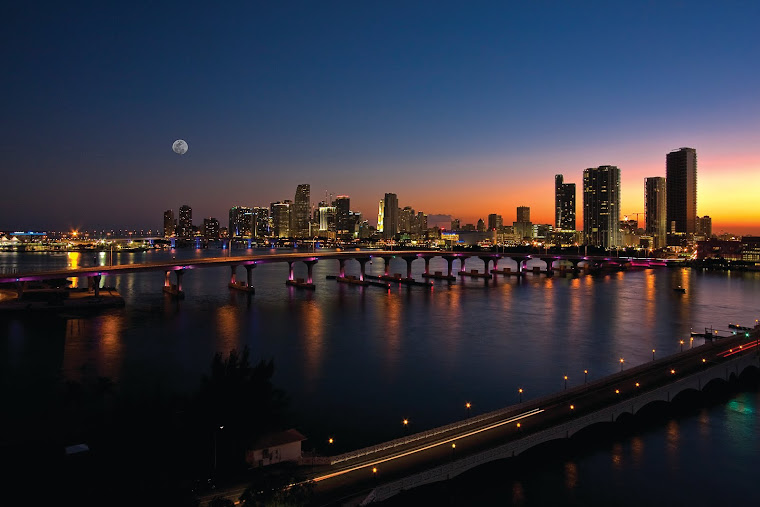
The Criscitos has been selling South Florida luxury and commercial real estate for over a decade and has sold over $1 billion dollars of property. They work as a multi-lingual team speaking english, Spanish, Italian and Portuguese. They carved out a niche as a leading boutique real estate company with two distinct divisions -residential and commercial- both personally overseeing by Marcela and Anthony Criscito.
Showing posts with label commercial. Show all posts
Showing posts with label commercial. Show all posts
Monday, November 29, 2010


Thursday, October 7, 2010
Foreigners Buying Up US Property
Home and condo prices have gotten so low in many areas of the country that foreign nationals are buying up property like it's an old Blue Light sale at K-Mart. American real estate seems like its on sale at bargain basement prices. But whether the spike in foreigners buying property materializes into a full swung market rebound may be the bigger question.
“We’re seeing an increase,” said Lamont Crump, director of sales for Condo Vultures in Miami, Florida. “Foreign purchases make up 50 to 60% of our sales.” Investors are swarming to Miami Beach from as far away as Europe and Israel to grab American land and condos. Buyers from Columbia, Brazil, France, Italy and Norway have been counted in recent transactions.
The trend has also been seen in many other large urban U.S. markets, including Los Angeles, New York, San Francisco and Las Vegas where housing prices have deflated at least halfway from their market peaks. Record low mortgage rates tied with low property prices may be driving the beginning of a real estate rebound anticipated and hoped for by real estate professionals for years.
Pending home sales, including single-family homes and condominiums in Miami-Dade County increased 28.6% in September compared to year ago figures, according to the Miami Association of Realtors. South Florida real estate sales are up due to the impact of international buyers.
“Current market performance points to sustainable demand for South Florida properties,” said Jack H. Levine, chairman of the board of the Miami association. “Record affordability, a wide selection of properties to choose, and an enviable lifestyle continue to attract both international and U.S. buyers.”
Pending condominium sales in Miami are higher than single family homes. In September, condominium pending sales increased 40% over a year ago to 5,838 units for the month. Pending sales of single-family homes rose 16.1% over 2009 levels.
“The Euro has recently re-strengthened, resulting in even greater demand from European buyers,” said Oliver Ruiz, the association’s president. “Many Latin American buyers are looking for a safe haven to invest their money. The Miami area is the top market for European and Latin American buyers in Florida.”
Source: http://www.housingpredictor.com/foreign-buyers.html
“We’re seeing an increase,” said Lamont Crump, director of sales for Condo Vultures in Miami, Florida. “Foreign purchases make up 50 to 60% of our sales.” Investors are swarming to Miami Beach from as far away as Europe and Israel to grab American land and condos. Buyers from Columbia, Brazil, France, Italy and Norway have been counted in recent transactions.
The trend has also been seen in many other large urban U.S. markets, including Los Angeles, New York, San Francisco and Las Vegas where housing prices have deflated at least halfway from their market peaks. Record low mortgage rates tied with low property prices may be driving the beginning of a real estate rebound anticipated and hoped for by real estate professionals for years.
Pending home sales, including single-family homes and condominiums in Miami-Dade County increased 28.6% in September compared to year ago figures, according to the Miami Association of Realtors. South Florida real estate sales are up due to the impact of international buyers.
“Current market performance points to sustainable demand for South Florida properties,” said Jack H. Levine, chairman of the board of the Miami association. “Record affordability, a wide selection of properties to choose, and an enviable lifestyle continue to attract both international and U.S. buyers.”
Pending condominium sales in Miami are higher than single family homes. In September, condominium pending sales increased 40% over a year ago to 5,838 units for the month. Pending sales of single-family homes rose 16.1% over 2009 levels.
“The Euro has recently re-strengthened, resulting in even greater demand from European buyers,” said Oliver Ruiz, the association’s president. “Many Latin American buyers are looking for a safe haven to invest their money. The Miami area is the top market for European and Latin American buyers in Florida.”
Source: http://www.housingpredictor.com/foreign-buyers.html
Thursday, August 19, 2010
Plans for new malls may signal a retail revival
In the first sign of life the South Florida retail market has seen in years, two major developers are dusting off plans for new big-box shopping centers and looking to recruit tenants.
And another developer has recently signed contracts on land for two more retail projects.
The earliest any of these Miami-Dade projects -- Gables Station and The Shops at Beacon Lakes -- would be ready for shopping in late 2012 or 2013. But some developers think it's time to start testing the waters again. It's the first activity since new development ground to a halt in 2008, a victim of the recession and the credit crunch.
Flagler and AMB Property Corporation are feeling confident enough to revive plans for The Shops at Beacon Lakes, which may be the first big box shopping center in Miami-Dade or Broward counties to move ahead since the recession. Workers have spent the past month clearing a 42-acre tract on the north side of State Road 836 west of Florida's Turnpike.
``The timing is good right now,'' said Alan Esquenazi, senior vice president of Continental Real Estate Companies, which is handling leasing for Flagler. ``We're seeing retailers taking interest in South Florida again, as long as they can afford it. As retail demand comes back, so does development.''
CHAINS' CHANCES
Local real estate brokers say that most of the retailers looking to expand in South Florida are successful existing chains like Target, Marshall's, Bed Bath & Beyond and Total Wine. The market also is presenting opportunities for newcomers like Bye Bye Baby, Dick's Sporting Goods, ALDI and hhgregg.
The key reason for the interest in South Florida -- and Miami-Dade County in particular -- is that it remains an underserved market for many big-box retailers and one where average sales volumes well exceed the national average. In Broward most of the current retail leasing activity is about filling vacancies in existing shopping centers.
What has changed dramatically are the rent prices retailers are willing to pay. Prices could easily be 30 to 40 percent lower than they were pre-recession.
Plus, retailers are no longer willing to gamble on a nontraditional site that doesn't conform with their prototype.
``There is much stronger scrutiny made on deals and are they going to generate enough sales to offset the cost,'' said Beth Azor of Azor Advisory Services. ``If not, the retailers will go to Peoria.''
While Beacon Lakes may be the first out of the starting gate, developer Jeff Berkowitz is close behind. Plans are back on the drawing board for Gables Station, a vertical big-box shopping center with four floors of retail planned for a 4.5-acre site at 4811 Le Jeune Rd.
``Now is the time to commit, in order to get projects delivered in three years,'' said Berkowitz, who hopes to begin construction in a year on the 300,000-square-foot project, which would include about six anchor stores.
``One would expect the economy will be back in three years,'' Berkowitz said. ``At least to the extent, that retailers can move forward to fill major gaps in their market plan, especially in a market like Coral Gables that has such a high barrier to entry.''
Bob Shapiro, president of Master Development, is feeling confident enough that in the last 45 days he put two sites under contract on Flagler Street. The locations: a 31-acre former golf course at West Flagler and 92nd Avenue and a 37-acre former mobile home park at West Flagler and 102nd Avenue.
``The market is dethawing, but it's not totally unfrozen yet,'' Shapiro said. ``I think there are do-able deals. Everybody is going to have to take a little bit less, including the developer. There are not going to be any grand slams, but there will be some singles and doubles.''
But the stumbling block for any of these projects could be the ability to make a deal with retailers that works financially. A litmus test of the market will come next week, when developers and retailers from around Florida gather in Orlando for the International Council of Shopping Centers convention.
`VERY SLOWLY'
``Deals are starting to happen, but very slowly and infrequently,'' said Stephen Bittel, chairman of Terranova, a Miami Beach retail real estate firm. He is particularly skeptical about the viability of leasing a project the size of Beacon Lakes in the current market.
``You can always fill it up,'' Bittel said. ``But can you fill at at a price that makes sense?''
A developer like Flagler and its partner AMB expects to have an advantage because they've owned the property at 1970 NW 129th Avenue for nearly 10 years. That's a key reason Flagler decided to develop Beacon Lakes on its own, unlike last time when plans called for selling the property to Regency Centers.
``We have the lowest cost basis so we can delivery a quality project at a cost that makes sense for the retailer,'' said Brian Latta, senior project manager of development at Flagler. ``Depending on demand, the project can be built in phases.''
The current plans call for about 450,000-square-feet, including two major anchors, plus about five additional big box stores and more than a half-dozen outparcels for restaurants and banks. When Regency Centers pulled out of a similar design in late 2008, they already had lined up commitments from at least four tenants: Target, Kohl's, Ross Dress for Less and T.J. Maxx.
Some brokers believe those previous commitments will make it easier for Beacon Lakes the second time around.
``Those tenants believed in the market at some point,'' said Greg Masin, senior director of retail with Cushman & Wakefield. ``The rooftops are still out there and there is still a need for that kind of use in the marketplace. These tenants are willing to do business -- it's a question of, under what terms and conditions?''
Source: http://www.miamiherald.com/2010/08/18/v-fullstory/1781771/plans-for-new-malls-may-signal.html
BY ELAINE WALKER
ewalker@MiamiHerald.com
And another developer has recently signed contracts on land for two more retail projects.
The earliest any of these Miami-Dade projects -- Gables Station and The Shops at Beacon Lakes -- would be ready for shopping in late 2012 or 2013. But some developers think it's time to start testing the waters again. It's the first activity since new development ground to a halt in 2008, a victim of the recession and the credit crunch.
Flagler and AMB Property Corporation are feeling confident enough to revive plans for The Shops at Beacon Lakes, which may be the first big box shopping center in Miami-Dade or Broward counties to move ahead since the recession. Workers have spent the past month clearing a 42-acre tract on the north side of State Road 836 west of Florida's Turnpike.
``The timing is good right now,'' said Alan Esquenazi, senior vice president of Continental Real Estate Companies, which is handling leasing for Flagler. ``We're seeing retailers taking interest in South Florida again, as long as they can afford it. As retail demand comes back, so does development.''
CHAINS' CHANCES
Local real estate brokers say that most of the retailers looking to expand in South Florida are successful existing chains like Target, Marshall's, Bed Bath & Beyond and Total Wine. The market also is presenting opportunities for newcomers like Bye Bye Baby, Dick's Sporting Goods, ALDI and hhgregg.
The key reason for the interest in South Florida -- and Miami-Dade County in particular -- is that it remains an underserved market for many big-box retailers and one where average sales volumes well exceed the national average. In Broward most of the current retail leasing activity is about filling vacancies in existing shopping centers.
What has changed dramatically are the rent prices retailers are willing to pay. Prices could easily be 30 to 40 percent lower than they were pre-recession.
Plus, retailers are no longer willing to gamble on a nontraditional site that doesn't conform with their prototype.
``There is much stronger scrutiny made on deals and are they going to generate enough sales to offset the cost,'' said Beth Azor of Azor Advisory Services. ``If not, the retailers will go to Peoria.''
While Beacon Lakes may be the first out of the starting gate, developer Jeff Berkowitz is close behind. Plans are back on the drawing board for Gables Station, a vertical big-box shopping center with four floors of retail planned for a 4.5-acre site at 4811 Le Jeune Rd.
``Now is the time to commit, in order to get projects delivered in three years,'' said Berkowitz, who hopes to begin construction in a year on the 300,000-square-foot project, which would include about six anchor stores.
``One would expect the economy will be back in three years,'' Berkowitz said. ``At least to the extent, that retailers can move forward to fill major gaps in their market plan, especially in a market like Coral Gables that has such a high barrier to entry.''
Bob Shapiro, president of Master Development, is feeling confident enough that in the last 45 days he put two sites under contract on Flagler Street. The locations: a 31-acre former golf course at West Flagler and 92nd Avenue and a 37-acre former mobile home park at West Flagler and 102nd Avenue.
``The market is dethawing, but it's not totally unfrozen yet,'' Shapiro said. ``I think there are do-able deals. Everybody is going to have to take a little bit less, including the developer. There are not going to be any grand slams, but there will be some singles and doubles.''
But the stumbling block for any of these projects could be the ability to make a deal with retailers that works financially. A litmus test of the market will come next week, when developers and retailers from around Florida gather in Orlando for the International Council of Shopping Centers convention.
`VERY SLOWLY'
``Deals are starting to happen, but very slowly and infrequently,'' said Stephen Bittel, chairman of Terranova, a Miami Beach retail real estate firm. He is particularly skeptical about the viability of leasing a project the size of Beacon Lakes in the current market.
``You can always fill it up,'' Bittel said. ``But can you fill at at a price that makes sense?''
A developer like Flagler and its partner AMB expects to have an advantage because they've owned the property at 1970 NW 129th Avenue for nearly 10 years. That's a key reason Flagler decided to develop Beacon Lakes on its own, unlike last time when plans called for selling the property to Regency Centers.
``We have the lowest cost basis so we can delivery a quality project at a cost that makes sense for the retailer,'' said Brian Latta, senior project manager of development at Flagler. ``Depending on demand, the project can be built in phases.''
The current plans call for about 450,000-square-feet, including two major anchors, plus about five additional big box stores and more than a half-dozen outparcels for restaurants and banks. When Regency Centers pulled out of a similar design in late 2008, they already had lined up commitments from at least four tenants: Target, Kohl's, Ross Dress for Less and T.J. Maxx.
Some brokers believe those previous commitments will make it easier for Beacon Lakes the second time around.
``Those tenants believed in the market at some point,'' said Greg Masin, senior director of retail with Cushman & Wakefield. ``The rooftops are still out there and there is still a need for that kind of use in the marketplace. These tenants are willing to do business -- it's a question of, under what terms and conditions?''
Source: http://www.miamiherald.com/2010/08/18/v-fullstory/1781771/plans-for-new-malls-may-signal.html
BY ELAINE WALKER
ewalker@MiamiHerald.com
Subscribe to:
Posts (Atom)