If you have been paying attention to the news on the television and in the papers lately, you probably know that the real estate market seems to be in a bit of a bind. Home sales are dwindling, and people aren’t able to get into the homes that they want. While this may be a problem in many areas of the country, it doesn’t hold true for certain locations.
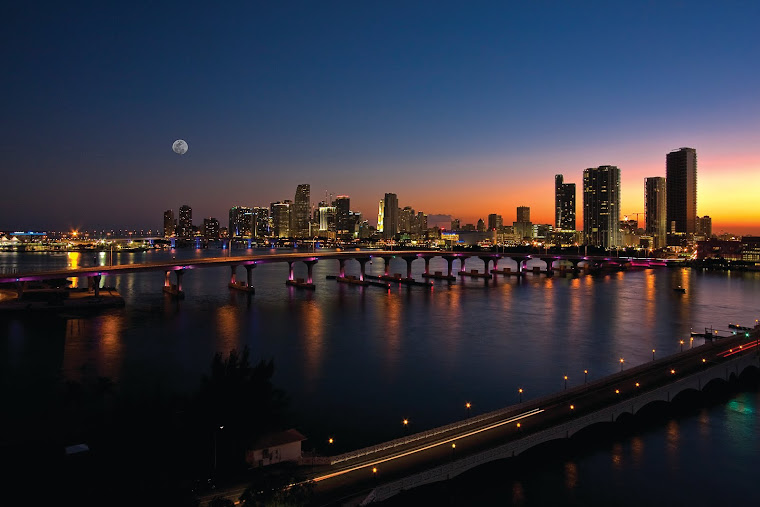
Why is there such a difference based on geography? The old saying of “location, location, location,” is very true in the real estate world. People are still buying homes in Miami because of the location. It offers people a close proximity to the beach as well as all of the attractions and shopping in the city. They have major sports teams, and they have great weather; the city offers excellent nightlife and incredible restaurants too. Miami is far more than just a vacation destination: people truly want to live there and experience the good life throughout the year. Who could blame them?
Who are all of the people who are moving south and stimulating the real estate market? They are people just like you, people who are tired of spending time in the cold, people who want to enjoy their retirement. You can also find people who are in the prime of their lives, young families and singles who want all of the glamour and excitement that a city like Miami holds.
It is more than just the snowbirds and the retirees that are buying up property in Miami. People from all around the world are attracted to the great prices on the luxury condos. The prices are only part of the factor though. People want to live near the water and they want to be close to a large city with great schools. All of these are reasons that the area around Miami is still doing so well even though other places in the country are struggling when it comes to real estate.
This is particularly excellent news for those who are looking to sell their homes. They should have no trouble in finding buyers who are ready to make the move to Miami.
With all of the great properties that are available now, with more high-rise condo buildings coming, now is a great time to start looking at a new home in Miami.
The Criscitos has been selling South Florida luxury and commercial real estate for over a decade and has sold over $1 billion dollars of property. They work as a multi-lingual team speaking english, Spanish, Italian and Portuguese. They carved out a niche as a leading boutique real estate company with two distinct divisions -residential and commercial- both personally overseeing by Marcela and Anthony Criscito.
Monday, August 30, 2010


Friday, August 27, 2010
Miami High-End Condos Experience a Miniboom
It is past half-time for 2010 Southeast Florida real estate sales. After a rocky 2009, how did 2010 weather so far, is the million dollar question many are asking. Prices started tumbling since September 2008 - and in certain market segments, housing values are still down significantly, but there is also good news to report as to market research provided by Brosda & Bentley Realtors. Especially for new luxury oceanfront condo developments in Sunny Isles Beach, Miami Beach and downtown Miami in particular, sales are booming and prices in some areas are on the rise.
Jade Beach condo tower, in North Miami Beach was nearly sold out during 2009, despite the dramatic economic downturn in the United States. Jade Beach resales are now strong and closed units are setting new retail sales records. Its sister tower Jade Ocean condos, is an oceanfront, ultra-luxurious glass palace, towering 50 stories above the Atlantic Ocean and reporting more than 60 percent of sold condominium units. The Acqualina Resort & condos, a landmark in Sunny Isles Beach, claim the title of highest retail sales price per square foot in the city. During the summer, two units closed at $784 and $714 per square foot respectively. The elite Turnberry Ocean Colony condos boasts six retail sales, with the highest being at $733 per square foot.
Some of the most expensive Miami penthouses sold thus far in 2010 include the Marquis penthouse in downtown Miami. It sold a few days after LeBron James announced his engagement with the Miami Heat. Entrepreneur Russell Wright closed on the 67-story Marquis luxury residential condo, with reportedly the highest terrace and hot tub in Miami. Dwayne Wade of the Miami Heat sold his house in Davie and is now apparently looking for a trophy property in Miami, as is Chris Bosh of the trio. Russell Wright is quoted as saying that the economic force of the three basketball superstars playing in Miami "Is going to have an impact, I probably already made money on the condo."
In June, the 'Imperial Suite' or Penthouse Villa B sold at the über-luxurious Setai Resort & Residences in Miami Beach for a record breaking $15 million or $2,416 per square foot.
Downtown Miami condo sales were up 110 percent with 1,933 units sold in the first 6 months of 2010. Great downtown Miami condos that sell due to drastic price reductions include Met I, Epic and Icon Brickell, which sold 49 units, including at least one with a $100,000 over-the-odds premium, after LeBron James announced his switch to the Miami Heat. The average sales price of a downtown Miami condo in the first two quarters of 2010 was reportedly $356,100 or about 16 percent higher than in 2009.
In March, April and May of 2010, 135 condos sold in Miami-Dade County priced $1 million and above, nearly double the number compared to the same time period in 2009. At the beginning of the summer, impressive sales at One Bal Harbour for $8.7 million, at the Fontainebleau for $9 million and Santa Maria Brickell for $11 million kept Miami luxury real estate brokers abuzz.
A highly anticipated new oceanfront condo development is the St. Regis Resort and condo residences in Bal Harbour, destined to open in 2011. The three glass towers replaced the famous Sheraton in front of the gated entrance to the renowned Bal Harbour Shops. Over $40 million in sales were reported in the first half of 2010.
Brosda & Bentley Realtors features more than 50,000 residential and commercial Southeast Florida property listings on its website BrosdaandBentley.com. The company provides free usage of the database to registered users. Consumers may also opt to receive automatic updates on new listings, pre-foreclosure and short sale properties. Katerina Brosda, Broker and CEO of the company sold the 10 Museum Park penthouse in downtown Miami with its very own rooftop pool. "Most of our clients during 2009 and 2010 were cash buyers, not investing into Miami real estate per se, but actually pursuing to live in the homes they bought. Yes, these may still be third or fourth trophy properties, this goes especially for condos, but our clients invested heavily in upgrades, eclectic designs, electronic SMART Home features, custom fittings and furniture," Katerina Brosda stated. Brosda & Bentley also provides a one stop, turnkey, white-glove home furnishings and design conceptualization service to its clients.
"Miami Condo sales above the $1 million mark will continue to outpace single-family home sales in the same price category for the rest of 2010 and into 2011. Condominium living is the new lifestyle choice of the wealthy," said Katerina Brosda.
Brosda & Bentley Realtors projects luxury Miami condominium sales to remain strong. The average sales price for residential properties that sold in Miami-Dade County increased by 8.3 percent in July. Inventory levels have dropped 11.4 percent compared to July 2009. Condominium listings have dropped 11 percent and the average days a property stays on the market decreased 10.3 percent for single-family homes and 11.9 percent for condominiums or 100 and 114 days respectively.
Source: http://www.prweb.com/releases/MiamiRealEstateMiniboom/082710/prweb4432054.htm
Jade Beach condo tower, in North Miami Beach was nearly sold out during 2009, despite the dramatic economic downturn in the United States. Jade Beach resales are now strong and closed units are setting new retail sales records. Its sister tower Jade Ocean condos, is an oceanfront, ultra-luxurious glass palace, towering 50 stories above the Atlantic Ocean and reporting more than 60 percent of sold condominium units. The Acqualina Resort & condos, a landmark in Sunny Isles Beach, claim the title of highest retail sales price per square foot in the city. During the summer, two units closed at $784 and $714 per square foot respectively. The elite Turnberry Ocean Colony condos boasts six retail sales, with the highest being at $733 per square foot.
Some of the most expensive Miami penthouses sold thus far in 2010 include the Marquis penthouse in downtown Miami. It sold a few days after LeBron James announced his engagement with the Miami Heat. Entrepreneur Russell Wright closed on the 67-story Marquis luxury residential condo, with reportedly the highest terrace and hot tub in Miami. Dwayne Wade of the Miami Heat sold his house in Davie and is now apparently looking for a trophy property in Miami, as is Chris Bosh of the trio. Russell Wright is quoted as saying that the economic force of the three basketball superstars playing in Miami "Is going to have an impact, I probably already made money on the condo."
In June, the 'Imperial Suite' or Penthouse Villa B sold at the über-luxurious Setai Resort & Residences in Miami Beach for a record breaking $15 million or $2,416 per square foot.
Downtown Miami condo sales were up 110 percent with 1,933 units sold in the first 6 months of 2010. Great downtown Miami condos that sell due to drastic price reductions include Met I, Epic and Icon Brickell, which sold 49 units, including at least one with a $100,000 over-the-odds premium, after LeBron James announced his switch to the Miami Heat. The average sales price of a downtown Miami condo in the first two quarters of 2010 was reportedly $356,100 or about 16 percent higher than in 2009.
In March, April and May of 2010, 135 condos sold in Miami-Dade County priced $1 million and above, nearly double the number compared to the same time period in 2009. At the beginning of the summer, impressive sales at One Bal Harbour for $8.7 million, at the Fontainebleau for $9 million and Santa Maria Brickell for $11 million kept Miami luxury real estate brokers abuzz.
A highly anticipated new oceanfront condo development is the St. Regis Resort and condo residences in Bal Harbour, destined to open in 2011. The three glass towers replaced the famous Sheraton in front of the gated entrance to the renowned Bal Harbour Shops. Over $40 million in sales were reported in the first half of 2010.
Brosda & Bentley Realtors features more than 50,000 residential and commercial Southeast Florida property listings on its website BrosdaandBentley.com. The company provides free usage of the database to registered users. Consumers may also opt to receive automatic updates on new listings, pre-foreclosure and short sale properties. Katerina Brosda, Broker and CEO of the company sold the 10 Museum Park penthouse in downtown Miami with its very own rooftop pool. "Most of our clients during 2009 and 2010 were cash buyers, not investing into Miami real estate per se, but actually pursuing to live in the homes they bought. Yes, these may still be third or fourth trophy properties, this goes especially for condos, but our clients invested heavily in upgrades, eclectic designs, electronic SMART Home features, custom fittings and furniture," Katerina Brosda stated. Brosda & Bentley also provides a one stop, turnkey, white-glove home furnishings and design conceptualization service to its clients.
"Miami Condo sales above the $1 million mark will continue to outpace single-family home sales in the same price category for the rest of 2010 and into 2011. Condominium living is the new lifestyle choice of the wealthy," said Katerina Brosda.
Brosda & Bentley Realtors projects luxury Miami condominium sales to remain strong. The average sales price for residential properties that sold in Miami-Dade County increased by 8.3 percent in July. Inventory levels have dropped 11.4 percent compared to July 2009. Condominium listings have dropped 11 percent and the average days a property stays on the market decreased 10.3 percent for single-family homes and 11.9 percent for condominiums or 100 and 114 days respectively.
Source: http://www.prweb.com/releases/MiamiRealEstateMiniboom/082710/prweb4432054.htm
Wednesday, August 25, 2010
Miami Condo Sales Soar
Once the nation’s epicenter in the real estate collapse Miami, Florida condo sales are soaring, up 43% over year ago levels, according to the Miami Association of Realtors. The Miami housing market has now experienced rising sales for nearly two straight years.
Miami ’s condominium market tanked even before the financial crisis struck Wall Street two years ago as New York based hedge funds and banks cancelled financing agreements on dozens of new condo developments being constructed. The new construction condo market almost froze, nearly paralyzed as a result, triggering a plunge in prices forcing many developers into bankruptcy.
But the rise in condo sales is breathing new life into the Miami housing market. “Demand for local properties, including multiple bidding reminiscent of the boom during the last decade is driving values,” said Miami Realtors President Oliver Ruiz. “Median and average sales prices are rising, while condominium prices are expected to follow due to the considerable increase in sales.”
The time it takes to market a home for sale dropped to 100 days for single family homes and 114 days for condominiums, showing that the market is nearing stabilization, despite declining condo prices.
However, the market isn’t without its challenges. Sales of existing single family homes dropped 8% in July from year ago figures, indicating the market is anything but fully stabilized. But record low mortgage rates and some of the lowest priced condos for any metropolitan region in the country should usher in a robust return in sales over the remainder of the year. Residential sales have increased for 23 straight months.
Even as home sales sank in the majority of the country by 27.2% in July, according to the National Association of Realtors, Miami and the rest of Florida condo sales increased. The median sales price for a condo in Miami in July was $110,500 down 20% from a year ago as bargain hunters bought up condos at some of the lowest prices in more than 15 years. Florida median sales prices declined 7% to $138,000 for single-family homes.
The inventory of residential listings marketed by the Miami-Dade County Realtors association dropped 11.4% from July of 2009, indicating that the market is showing strong signs of finally entering the recovery phase after record housing deflation. Average home sale prices are rising after hitting 30-year low values in many single family home neighborhoods. But lower prices obtained for condos still hurt the overall market.
Source: http://www.housingpredictor.com/miami-condo-sales-soar.html
By Kevin Chiu
Miami ’s condominium market tanked even before the financial crisis struck Wall Street two years ago as New York based hedge funds and banks cancelled financing agreements on dozens of new condo developments being constructed. The new construction condo market almost froze, nearly paralyzed as a result, triggering a plunge in prices forcing many developers into bankruptcy.
But the rise in condo sales is breathing new life into the Miami housing market. “Demand for local properties, including multiple bidding reminiscent of the boom during the last decade is driving values,” said Miami Realtors President Oliver Ruiz. “Median and average sales prices are rising, while condominium prices are expected to follow due to the considerable increase in sales.”
The time it takes to market a home for sale dropped to 100 days for single family homes and 114 days for condominiums, showing that the market is nearing stabilization, despite declining condo prices.
However, the market isn’t without its challenges. Sales of existing single family homes dropped 8% in July from year ago figures, indicating the market is anything but fully stabilized. But record low mortgage rates and some of the lowest priced condos for any metropolitan region in the country should usher in a robust return in sales over the remainder of the year. Residential sales have increased for 23 straight months.
Even as home sales sank in the majority of the country by 27.2% in July, according to the National Association of Realtors, Miami and the rest of Florida condo sales increased. The median sales price for a condo in Miami in July was $110,500 down 20% from a year ago as bargain hunters bought up condos at some of the lowest prices in more than 15 years. Florida median sales prices declined 7% to $138,000 for single-family homes.
The inventory of residential listings marketed by the Miami-Dade County Realtors association dropped 11.4% from July of 2009, indicating that the market is showing strong signs of finally entering the recovery phase after record housing deflation. Average home sale prices are rising after hitting 30-year low values in many single family home neighborhoods. But lower prices obtained for condos still hurt the overall market.
Source: http://www.housingpredictor.com/miami-condo-sales-soar.html
By Kevin Chiu
Monday, August 23, 2010
Miami Design District: Fashion, food and art
The several-block stretch of Miami that houses art galleries, mouth-watering eateries, high-end fashion and furniture showrooms got its start in sofas.
``From the beginning, the Design District was an international destination,'' said Craig Robins, CEO of real estate company Dacra, the primary landlord. ``The bad news was that furniture design doesn't attract a lot of foot traffic.''
While the neighborhood still doesn't get the general traffic of, say, Aventura Mall or Lincoln Road in South Beach, its reputation has gone from near-deserted trade district to Mecca of chic.
Within the last couple years, high-end retailers like Marni, Tomas Maier and Christian Louboutin have opened, and restaurants like Michael's Genuine Food & Drink and Sra. Martinez have established the district as a culinary destination.
Dacra spends about $2 million to promote the area, in large part through nontraditional methods like investing in public art or supporting exhibitions.
The strategy has focused on digital content, social media and online activity in recent years; print advertising is modest and mostly local, for example. Robins said he wants to get attention from sophisticated, creative visitors once they are already here rather than try to lure them to hop on a plane.
``If you start trying to advertise all over the world for something that's very localized, I think it's a mistake,'' he said.
Closer to home, the efforts also include putting on a monthly gallery walk and introducing $3 valet parking throughout the district.
For now, the neighborhood cannot pitch itself as a place to stay; there are no hotels. Robins said he has been approached by many, but wants to hold out for something unique.
Positioned on the west end of the Julia Tuttle Causeway, the district draws much of its traffic from Miami Beach -- and lost its flagship event, Design Miami, to the beach.
It was a decision Robins, majority owner of the event, made to give Design Miami more space and place it closer to Art Basel, the art world's annual descent on Miami Beach.
Robins was key to the redevelopment of South Beach two decades ago and then started buying property in the nearly deserted Design District in the mid-1990s. The 2002 arrival of Art Basel Miami Beach -- which Robins supported -- helped earn it widespread attention.
Though no clear numbers are availble, Robins said he believes the efforts to promote the locale as a destination is working.
``What we noticed this year was a very significant jump in retail sales to foreigners or tourists,'' he said. ``It was the first time the Design District broke from kind of being a local oasis to also attracting a lot of out of town guests.''
Eyeglass and clothing boutique owner Irina Chovkovy said she gets customers from around the world. They come to I on the District for the same reason she chose the Design District: because it is artsy, unusual and design-oriented.
Sloan Schaffer, owner of the commercial art gallery 101/exhibit, said he loves the area but thinks more work needs to be done to draw visitors. He works on committees trying to enhance amenities and draw more events to the area.
``It's this little niche that I think is really vital for Miami and it's a vibrant little area that has really defined its own mission and its own identity within the past couple of years,'' Schaffer said.
Source: http://www.miamiherald.com/2010/08/22/1785468/miami-design-district-fashion.html
-- HANNAH SAMPSON
DESIGN DISTRICT
Population: Not residential, but an estimated 65,000 in nearby Wynwood and Little Haiti.
The draw: Furniture, fashion, food and art
The pitch: Miami's creative laboratory
Budget: $2 million.
Who pays: Dacra, the real estate firm that owns much of the district
Challenge: No hotels
Website: miamidesigndistrict.net
``From the beginning, the Design District was an international destination,'' said Craig Robins, CEO of real estate company Dacra, the primary landlord. ``The bad news was that furniture design doesn't attract a lot of foot traffic.''
While the neighborhood still doesn't get the general traffic of, say, Aventura Mall or Lincoln Road in South Beach, its reputation has gone from near-deserted trade district to Mecca of chic.
Within the last couple years, high-end retailers like Marni, Tomas Maier and Christian Louboutin have opened, and restaurants like Michael's Genuine Food & Drink and Sra. Martinez have established the district as a culinary destination.
Dacra spends about $2 million to promote the area, in large part through nontraditional methods like investing in public art or supporting exhibitions.
The strategy has focused on digital content, social media and online activity in recent years; print advertising is modest and mostly local, for example. Robins said he wants to get attention from sophisticated, creative visitors once they are already here rather than try to lure them to hop on a plane.
``If you start trying to advertise all over the world for something that's very localized, I think it's a mistake,'' he said.
Closer to home, the efforts also include putting on a monthly gallery walk and introducing $3 valet parking throughout the district.
For now, the neighborhood cannot pitch itself as a place to stay; there are no hotels. Robins said he has been approached by many, but wants to hold out for something unique.
Positioned on the west end of the Julia Tuttle Causeway, the district draws much of its traffic from Miami Beach -- and lost its flagship event, Design Miami, to the beach.
It was a decision Robins, majority owner of the event, made to give Design Miami more space and place it closer to Art Basel, the art world's annual descent on Miami Beach.
Robins was key to the redevelopment of South Beach two decades ago and then started buying property in the nearly deserted Design District in the mid-1990s. The 2002 arrival of Art Basel Miami Beach -- which Robins supported -- helped earn it widespread attention.
Though no clear numbers are availble, Robins said he believes the efforts to promote the locale as a destination is working.
``What we noticed this year was a very significant jump in retail sales to foreigners or tourists,'' he said. ``It was the first time the Design District broke from kind of being a local oasis to also attracting a lot of out of town guests.''
Eyeglass and clothing boutique owner Irina Chovkovy said she gets customers from around the world. They come to I on the District for the same reason she chose the Design District: because it is artsy, unusual and design-oriented.
Sloan Schaffer, owner of the commercial art gallery 101/exhibit, said he loves the area but thinks more work needs to be done to draw visitors. He works on committees trying to enhance amenities and draw more events to the area.
``It's this little niche that I think is really vital for Miami and it's a vibrant little area that has really defined its own mission and its own identity within the past couple of years,'' Schaffer said.
Source: http://www.miamiherald.com/2010/08/22/1785468/miami-design-district-fashion.html
-- HANNAH SAMPSON
DESIGN DISTRICT
Population: Not residential, but an estimated 65,000 in nearby Wynwood and Little Haiti.
The draw: Furniture, fashion, food and art
The pitch: Miami's creative laboratory
Budget: $2 million.
Who pays: Dacra, the real estate firm that owns much of the district
Challenge: No hotels
Website: miamidesigndistrict.net
Friday, August 20, 2010
$79 Million Refinancing for The Shops at Sunset Place in Miami Arranged by HFF
The Miami office of HFF (Holliday Fenoglio Fowler, L.P.) announced today that it has arranged a $79 million refinancing for The Shops at Sunset Place, an open-air mall in Miami, Florida.
HFF executive managing director Manny de Zarraga, director Luis Castillo and managing director Danny Finkle, in conjunction with managing director Claudia Steeb and executive managing director and managing member John Pelusi, Jr. of the Pittsburgh office of HFF, worked exclusively on behalf of the property's ownership group comprised of Simon Property Group and Institutional Mall Investors, LLC, a joint venture between an affiliate of Miller Capital Advisory, Inc. and the California Public Employees' Retirement System (CalPERS). The HFF team secured the 10-year, fixed-rate loan through JP Morgan Securities, Inc., which replaced a maturing facility on the property.
The Shops at Sunset Place is located at 5701 Sunset Drive at the intersection of US Route 1 and SW 57th Avenue in South Miami. Completed in 1999, the property has three open-air retail buildings and an eight-story parking garage all connected via pedestrian sidewalks and bridges. The Shops at Sunset Place is leased to a variety of tenants including AMC Theaters, LA Fitness, Gameworks, Barnes & Noble, Niketown and Splitsville, among others.
"This is the dominant entertainment and lifestyle center in Miami and provides one of the most unique venues in the market," said Castillo. "The combination of stellar sponsorship, strong surrounding demographics and proven operating history attracted a large number of lenders, which competed aggressively for the financing opportunity."
Simon Property Group, Inc. is an S&P 500 company and the largest real estate company in the U.S. The company currently owns or has an interest in more than 373 properties comprising in excess of 256 million square feet of gross leasable area in North America, Europe and Asia.
Institutional Mall Investors LLC ("IMI") is a co-investment venture owned by an affiliate of Miller Capital Advisory, Inc. (MCA) and CalPERS. MCA serves as investment manager for IMI. IMI is a core-oriented investment platform focused on high quality, market dominant, fashion-oriented retail properties. The IMI portfolio features some of the most dominant regional and super regional shopping centers in the United States. As of June 2010, the portfolio included approximately 16.4 million square feet of retail GLA and over 750 thousand square feet of prime office space. IMI also seeks to invest in productive lifestyle, mixed-use and development opportunities as circumstances warrant.
HFF /quotes/comstock/13*!hf/quotes/nls/hf (HF 7.58, +0.01, +0.13%) operates out of 17 offices nationwide and is a leading provider of commercial real estate and capital markets services to the U.S. commercial real estate industry. HFF offers clients a fully integrated national capital markets platform including debt placement, investment sales, advisory services, structured finance, private equity, loan sales and commercial loan servicing.
Source: http://www.marketwatch.com/story/79-million-refinancing-for-the-shops-at-sunset-place-in-miami-arranged-by-hff-2010-08-19?reflink=MW_news_stmp
HFF
Director
Luis Castillo, 305-448-1333
lcastillo@hfflp.com
or
Associate Director, Marketing
Kristen Murphy, 713-852-3500
krmurphy@hfflp.com
HFF executive managing director Manny de Zarraga, director Luis Castillo and managing director Danny Finkle, in conjunction with managing director Claudia Steeb and executive managing director and managing member John Pelusi, Jr. of the Pittsburgh office of HFF, worked exclusively on behalf of the property's ownership group comprised of Simon Property Group and Institutional Mall Investors, LLC, a joint venture between an affiliate of Miller Capital Advisory, Inc. and the California Public Employees' Retirement System (CalPERS). The HFF team secured the 10-year, fixed-rate loan through JP Morgan Securities, Inc., which replaced a maturing facility on the property.
The Shops at Sunset Place is located at 5701 Sunset Drive at the intersection of US Route 1 and SW 57th Avenue in South Miami. Completed in 1999, the property has three open-air retail buildings and an eight-story parking garage all connected via pedestrian sidewalks and bridges. The Shops at Sunset Place is leased to a variety of tenants including AMC Theaters, LA Fitness, Gameworks, Barnes & Noble, Niketown and Splitsville, among others.
"This is the dominant entertainment and lifestyle center in Miami and provides one of the most unique venues in the market," said Castillo. "The combination of stellar sponsorship, strong surrounding demographics and proven operating history attracted a large number of lenders, which competed aggressively for the financing opportunity."
Simon Property Group, Inc. is an S&P 500 company and the largest real estate company in the U.S. The company currently owns or has an interest in more than 373 properties comprising in excess of 256 million square feet of gross leasable area in North America, Europe and Asia.
Institutional Mall Investors LLC ("IMI") is a co-investment venture owned by an affiliate of Miller Capital Advisory, Inc. (MCA) and CalPERS. MCA serves as investment manager for IMI. IMI is a core-oriented investment platform focused on high quality, market dominant, fashion-oriented retail properties. The IMI portfolio features some of the most dominant regional and super regional shopping centers in the United States. As of June 2010, the portfolio included approximately 16.4 million square feet of retail GLA and over 750 thousand square feet of prime office space. IMI also seeks to invest in productive lifestyle, mixed-use and development opportunities as circumstances warrant.
HFF /quotes/comstock/13*!hf/quotes/nls/hf (HF 7.58, +0.01, +0.13%) operates out of 17 offices nationwide and is a leading provider of commercial real estate and capital markets services to the U.S. commercial real estate industry. HFF offers clients a fully integrated national capital markets platform including debt placement, investment sales, advisory services, structured finance, private equity, loan sales and commercial loan servicing.
Source: http://www.marketwatch.com/story/79-million-refinancing-for-the-shops-at-sunset-place-in-miami-arranged-by-hff-2010-08-19?reflink=MW_news_stmp
HFF
Director
Luis Castillo, 305-448-1333
lcastillo@hfflp.com
or
Associate Director, Marketing
Kristen Murphy, 713-852-3500
krmurphy@hfflp.com
Thursday, August 19, 2010
Plans for new malls may signal a retail revival
In the first sign of life the South Florida retail market has seen in years, two major developers are dusting off plans for new big-box shopping centers and looking to recruit tenants.
And another developer has recently signed contracts on land for two more retail projects.
The earliest any of these Miami-Dade projects -- Gables Station and The Shops at Beacon Lakes -- would be ready for shopping in late 2012 or 2013. But some developers think it's time to start testing the waters again. It's the first activity since new development ground to a halt in 2008, a victim of the recession and the credit crunch.
Flagler and AMB Property Corporation are feeling confident enough to revive plans for The Shops at Beacon Lakes, which may be the first big box shopping center in Miami-Dade or Broward counties to move ahead since the recession. Workers have spent the past month clearing a 42-acre tract on the north side of State Road 836 west of Florida's Turnpike.
``The timing is good right now,'' said Alan Esquenazi, senior vice president of Continental Real Estate Companies, which is handling leasing for Flagler. ``We're seeing retailers taking interest in South Florida again, as long as they can afford it. As retail demand comes back, so does development.''
CHAINS' CHANCES
Local real estate brokers say that most of the retailers looking to expand in South Florida are successful existing chains like Target, Marshall's, Bed Bath & Beyond and Total Wine. The market also is presenting opportunities for newcomers like Bye Bye Baby, Dick's Sporting Goods, ALDI and hhgregg.
The key reason for the interest in South Florida -- and Miami-Dade County in particular -- is that it remains an underserved market for many big-box retailers and one where average sales volumes well exceed the national average. In Broward most of the current retail leasing activity is about filling vacancies in existing shopping centers.
What has changed dramatically are the rent prices retailers are willing to pay. Prices could easily be 30 to 40 percent lower than they were pre-recession.
Plus, retailers are no longer willing to gamble on a nontraditional site that doesn't conform with their prototype.
``There is much stronger scrutiny made on deals and are they going to generate enough sales to offset the cost,'' said Beth Azor of Azor Advisory Services. ``If not, the retailers will go to Peoria.''
While Beacon Lakes may be the first out of the starting gate, developer Jeff Berkowitz is close behind. Plans are back on the drawing board for Gables Station, a vertical big-box shopping center with four floors of retail planned for a 4.5-acre site at 4811 Le Jeune Rd.
``Now is the time to commit, in order to get projects delivered in three years,'' said Berkowitz, who hopes to begin construction in a year on the 300,000-square-foot project, which would include about six anchor stores.
``One would expect the economy will be back in three years,'' Berkowitz said. ``At least to the extent, that retailers can move forward to fill major gaps in their market plan, especially in a market like Coral Gables that has such a high barrier to entry.''
Bob Shapiro, president of Master Development, is feeling confident enough that in the last 45 days he put two sites under contract on Flagler Street. The locations: a 31-acre former golf course at West Flagler and 92nd Avenue and a 37-acre former mobile home park at West Flagler and 102nd Avenue.
``The market is dethawing, but it's not totally unfrozen yet,'' Shapiro said. ``I think there are do-able deals. Everybody is going to have to take a little bit less, including the developer. There are not going to be any grand slams, but there will be some singles and doubles.''
But the stumbling block for any of these projects could be the ability to make a deal with retailers that works financially. A litmus test of the market will come next week, when developers and retailers from around Florida gather in Orlando for the International Council of Shopping Centers convention.
`VERY SLOWLY'
``Deals are starting to happen, but very slowly and infrequently,'' said Stephen Bittel, chairman of Terranova, a Miami Beach retail real estate firm. He is particularly skeptical about the viability of leasing a project the size of Beacon Lakes in the current market.
``You can always fill it up,'' Bittel said. ``But can you fill at at a price that makes sense?''
A developer like Flagler and its partner AMB expects to have an advantage because they've owned the property at 1970 NW 129th Avenue for nearly 10 years. That's a key reason Flagler decided to develop Beacon Lakes on its own, unlike last time when plans called for selling the property to Regency Centers.
``We have the lowest cost basis so we can delivery a quality project at a cost that makes sense for the retailer,'' said Brian Latta, senior project manager of development at Flagler. ``Depending on demand, the project can be built in phases.''
The current plans call for about 450,000-square-feet, including two major anchors, plus about five additional big box stores and more than a half-dozen outparcels for restaurants and banks. When Regency Centers pulled out of a similar design in late 2008, they already had lined up commitments from at least four tenants: Target, Kohl's, Ross Dress for Less and T.J. Maxx.
Some brokers believe those previous commitments will make it easier for Beacon Lakes the second time around.
``Those tenants believed in the market at some point,'' said Greg Masin, senior director of retail with Cushman & Wakefield. ``The rooftops are still out there and there is still a need for that kind of use in the marketplace. These tenants are willing to do business -- it's a question of, under what terms and conditions?''
Source: http://www.miamiherald.com/2010/08/18/v-fullstory/1781771/plans-for-new-malls-may-signal.html
BY ELAINE WALKER
ewalker@MiamiHerald.com
And another developer has recently signed contracts on land for two more retail projects.
The earliest any of these Miami-Dade projects -- Gables Station and The Shops at Beacon Lakes -- would be ready for shopping in late 2012 or 2013. But some developers think it's time to start testing the waters again. It's the first activity since new development ground to a halt in 2008, a victim of the recession and the credit crunch.
Flagler and AMB Property Corporation are feeling confident enough to revive plans for The Shops at Beacon Lakes, which may be the first big box shopping center in Miami-Dade or Broward counties to move ahead since the recession. Workers have spent the past month clearing a 42-acre tract on the north side of State Road 836 west of Florida's Turnpike.
``The timing is good right now,'' said Alan Esquenazi, senior vice president of Continental Real Estate Companies, which is handling leasing for Flagler. ``We're seeing retailers taking interest in South Florida again, as long as they can afford it. As retail demand comes back, so does development.''
CHAINS' CHANCES
Local real estate brokers say that most of the retailers looking to expand in South Florida are successful existing chains like Target, Marshall's, Bed Bath & Beyond and Total Wine. The market also is presenting opportunities for newcomers like Bye Bye Baby, Dick's Sporting Goods, ALDI and hhgregg.
The key reason for the interest in South Florida -- and Miami-Dade County in particular -- is that it remains an underserved market for many big-box retailers and one where average sales volumes well exceed the national average. In Broward most of the current retail leasing activity is about filling vacancies in existing shopping centers.
What has changed dramatically are the rent prices retailers are willing to pay. Prices could easily be 30 to 40 percent lower than they were pre-recession.
Plus, retailers are no longer willing to gamble on a nontraditional site that doesn't conform with their prototype.
``There is much stronger scrutiny made on deals and are they going to generate enough sales to offset the cost,'' said Beth Azor of Azor Advisory Services. ``If not, the retailers will go to Peoria.''
While Beacon Lakes may be the first out of the starting gate, developer Jeff Berkowitz is close behind. Plans are back on the drawing board for Gables Station, a vertical big-box shopping center with four floors of retail planned for a 4.5-acre site at 4811 Le Jeune Rd.
``Now is the time to commit, in order to get projects delivered in three years,'' said Berkowitz, who hopes to begin construction in a year on the 300,000-square-foot project, which would include about six anchor stores.
``One would expect the economy will be back in three years,'' Berkowitz said. ``At least to the extent, that retailers can move forward to fill major gaps in their market plan, especially in a market like Coral Gables that has such a high barrier to entry.''
Bob Shapiro, president of Master Development, is feeling confident enough that in the last 45 days he put two sites under contract on Flagler Street. The locations: a 31-acre former golf course at West Flagler and 92nd Avenue and a 37-acre former mobile home park at West Flagler and 102nd Avenue.
``The market is dethawing, but it's not totally unfrozen yet,'' Shapiro said. ``I think there are do-able deals. Everybody is going to have to take a little bit less, including the developer. There are not going to be any grand slams, but there will be some singles and doubles.''
But the stumbling block for any of these projects could be the ability to make a deal with retailers that works financially. A litmus test of the market will come next week, when developers and retailers from around Florida gather in Orlando for the International Council of Shopping Centers convention.
`VERY SLOWLY'
``Deals are starting to happen, but very slowly and infrequently,'' said Stephen Bittel, chairman of Terranova, a Miami Beach retail real estate firm. He is particularly skeptical about the viability of leasing a project the size of Beacon Lakes in the current market.
``You can always fill it up,'' Bittel said. ``But can you fill at at a price that makes sense?''
A developer like Flagler and its partner AMB expects to have an advantage because they've owned the property at 1970 NW 129th Avenue for nearly 10 years. That's a key reason Flagler decided to develop Beacon Lakes on its own, unlike last time when plans called for selling the property to Regency Centers.
``We have the lowest cost basis so we can delivery a quality project at a cost that makes sense for the retailer,'' said Brian Latta, senior project manager of development at Flagler. ``Depending on demand, the project can be built in phases.''
The current plans call for about 450,000-square-feet, including two major anchors, plus about five additional big box stores and more than a half-dozen outparcels for restaurants and banks. When Regency Centers pulled out of a similar design in late 2008, they already had lined up commitments from at least four tenants: Target, Kohl's, Ross Dress for Less and T.J. Maxx.
Some brokers believe those previous commitments will make it easier for Beacon Lakes the second time around.
``Those tenants believed in the market at some point,'' said Greg Masin, senior director of retail with Cushman & Wakefield. ``The rooftops are still out there and there is still a need for that kind of use in the marketplace. These tenants are willing to do business -- it's a question of, under what terms and conditions?''
Source: http://www.miamiherald.com/2010/08/18/v-fullstory/1781771/plans-for-new-malls-may-signal.html
BY ELAINE WALKER
ewalker@MiamiHerald.com
Wednesday, August 18, 2010
South Beach's Royal Palm sold at auction
An iconic South Beach resort that came to symbolize the region's real estate boom and bust has found a new owner -- and is now seeking a company to manage operations.
The 409-room Royal Palm Resort Hotel, which has been mired in debt and drama for the past few years, went to California-based Sunstone Hotel Investors via an online foreclosure auction. Sunstone, a real estate investment trust, submitted the $126.1 million high bid and plans a comprehensive renovation at the oceanfront hotel.
Sunstone owns 30 other hotels around the country, including the Hilton Times Square in New York and the Fairmont Newport Beach in California. The Royal Palm is its second Florida acquisition; it also owns the Marriott Renaissance in Orlando.
The Royal Palm ``fits squarely within our target criteria -- excellent real estate, well located within a perennially strong market, with significant upside potential through a full renovation and repositioning program,'' Sunstone president and CEO Art Buser said in a statement. The company has not yet chosen a manager for the Royal Palm.
The hotel at 1545 Collins Ave., which sits on nearly two acres, has gone through a string of owners and legal battles.
In the 1990s, developer R. Donahue Peebles won the deal to open the country's first majority black-owned hotel as part of Miami Beach's efforts to end a tourism boycott. The city helped finance the project, which turned into a teardown and reconstruction rather than renovation of the historic hotel. The new Royal Palm opened in 2002.
Peebles sold most of the hotel in 2005 to investors Guy Mitchell and Robert Falor, who planned a condo-hotel conversion. The conversion plan flopped, as did several other of the duo's planned projects, and the property eventually went into foreclosure.
Mitchell was indicted in May on bank fraud, bribery and conspiracy charges, though the indictment did not mention the Royal Palm.
Hotel investment services firm Jones Lang LaSalle Hotels was retained by the court-appointed receiver as the agent for the Royal Palm's foreclosure sale.
Interest in the beachfront hotel was high, and more than 60 potential buyers had toured it since May, said Gregory Rumpel, executive vice president for Jones Lang LaSalle Hotels.
The purchase is ``a tremendous opportunity,'' Rumpel said, but warned that renovations would ``take a lot of money and time.''
Sunstone previously bought some of the hotel's debt at a discount. The company expects renovations to take about two years to complete, it said in a release. The company did not say how much it expected to invest in renovations.
News of the Royal Palm's fate follows the sale of another distressed property on the beach earlier this summer. Marriott bought the Seville Beach Hotel in a $57.5 million short sale with plans to renovate and reopen it under the Edition brand, a partnership with celebrity hotelier Ian Schrager.
Commercial real estate attorney Jim Soble said he expected to see more hotels follow suit in the near future.
``I think there's a number of hotels that may have been purchased in the last 3-5 years and financed at numbers that don't make economic sense today,'' he said. ``It's a question as to when the the owners of the hotels or the holders of the financing of these properties make an election to put them on the market.''
Source: http://www.miamiherald.com/2010/08/18/1780534/royal-palm-sold-at-auction.html
BY HANNAH SAMPSON
hsampson@MiamiHerald.com
The 409-room Royal Palm Resort Hotel, which has been mired in debt and drama for the past few years, went to California-based Sunstone Hotel Investors via an online foreclosure auction. Sunstone, a real estate investment trust, submitted the $126.1 million high bid and plans a comprehensive renovation at the oceanfront hotel.
Sunstone owns 30 other hotels around the country, including the Hilton Times Square in New York and the Fairmont Newport Beach in California. The Royal Palm is its second Florida acquisition; it also owns the Marriott Renaissance in Orlando.
The Royal Palm ``fits squarely within our target criteria -- excellent real estate, well located within a perennially strong market, with significant upside potential through a full renovation and repositioning program,'' Sunstone president and CEO Art Buser said in a statement. The company has not yet chosen a manager for the Royal Palm.
The hotel at 1545 Collins Ave., which sits on nearly two acres, has gone through a string of owners and legal battles.
In the 1990s, developer R. Donahue Peebles won the deal to open the country's first majority black-owned hotel as part of Miami Beach's efforts to end a tourism boycott. The city helped finance the project, which turned into a teardown and reconstruction rather than renovation of the historic hotel. The new Royal Palm opened in 2002.
Peebles sold most of the hotel in 2005 to investors Guy Mitchell and Robert Falor, who planned a condo-hotel conversion. The conversion plan flopped, as did several other of the duo's planned projects, and the property eventually went into foreclosure.
Mitchell was indicted in May on bank fraud, bribery and conspiracy charges, though the indictment did not mention the Royal Palm.
Hotel investment services firm Jones Lang LaSalle Hotels was retained by the court-appointed receiver as the agent for the Royal Palm's foreclosure sale.
Interest in the beachfront hotel was high, and more than 60 potential buyers had toured it since May, said Gregory Rumpel, executive vice president for Jones Lang LaSalle Hotels.
The purchase is ``a tremendous opportunity,'' Rumpel said, but warned that renovations would ``take a lot of money and time.''
Sunstone previously bought some of the hotel's debt at a discount. The company expects renovations to take about two years to complete, it said in a release. The company did not say how much it expected to invest in renovations.
News of the Royal Palm's fate follows the sale of another distressed property on the beach earlier this summer. Marriott bought the Seville Beach Hotel in a $57.5 million short sale with plans to renovate and reopen it under the Edition brand, a partnership with celebrity hotelier Ian Schrager.
Commercial real estate attorney Jim Soble said he expected to see more hotels follow suit in the near future.
``I think there's a number of hotels that may have been purchased in the last 3-5 years and financed at numbers that don't make economic sense today,'' he said. ``It's a question as to when the the owners of the hotels or the holders of the financing of these properties make an election to put them on the market.''
Source: http://www.miamiherald.com/2010/08/18/1780534/royal-palm-sold-at-auction.html
BY HANNAH SAMPSON
hsampson@MiamiHerald.com
Subscribe to:
Posts (Atom)